
No products in the cart.


Book Lover Gifts, Crafting Guides, Paper Crafting Tips
Imprint Your Imagination: How Craft-Minded Book Lovers Turn Embossing into an Art Form

There is a particular kind of book lover who does only read books. They collect them, organize them, annotate them, and care for them the way other people care for art. If that description sounds familiar, you probably already know what a custom book embosser is. But using one creatively is a different matter altogether.
This is not a guide for beginners learning to press their embosser into paper for the first time. This is for the crafters who want to go further. The ones who see an embosser as more than a practical ownership stamp and want to turn it into a genuine expression of literary personality.
Precision Is the Foundation of Everything Creative
Before creativity can do anything interesting, the mechanics have to be right. A crisp, clean embossed impression is not just about pressing hard. It comes from understanding three variables that interact with each other every time you stamp.
The first is pressure. Too much and you distort the design, potentially tearing finer details into the page. Too little and the impression is shallow, barely there, and washes out in certain lighting. The right pressure leaves a clearly raised image that holds its shape across the entire design field.
The second is surface consistency. Stamping on a single page unsupported gives an uneven result because there is nothing to push back against the plates evenly. A stack of five or six pages underneath your target surface creates the right resistance. This is one of those things that looks minor but changes the result noticeably.
The third is alignment. For a single central impression this is straightforward. For anyone placing multiple impressions on a page, or positioning the stamp in relation to a specific part of the book, alignment makes or breaks the finished look. Mark your placement lightly with a pencil before committing. Erase after.
Where Advanced Crafters Place the Stamp
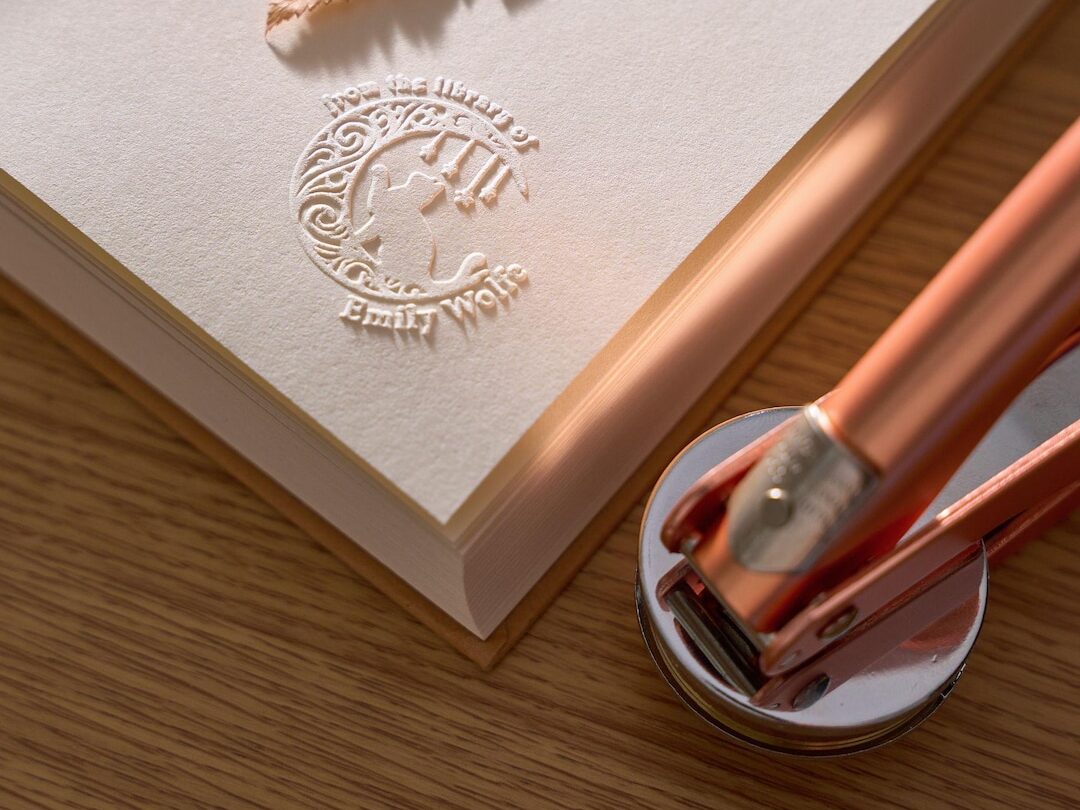
Most people stamp on the first blank page and call it done. That works. But the placement itself is a creative decision, and changing it changes the entire feel of the mark.
Stamping on the title page, centered above or below the printed title, creates a conversation between your identity as the owner and the author’s identity on the page. It feels deliberate rather than functional. For collectors who prize presentation, this placement makes the book feel curated rather than just acquired.
Stamping on the fore-edge endpaper, the narrow strip at the book’s open edge, gives a subtle mark that only reveals itself when you fan the pages. This works best with books you lend out regularly since the mark is easy to find but does not interrupt the reading experience.
For paperback novels that you read hard and give away, a single clean stamp on the inside cover is clean and intentional. For hardcover editions you plan to keep for decades, placing the stamp on both the first blank endpaper and the title page creates a cohesive ownership record that holds up over time.
The Design Is the Statement
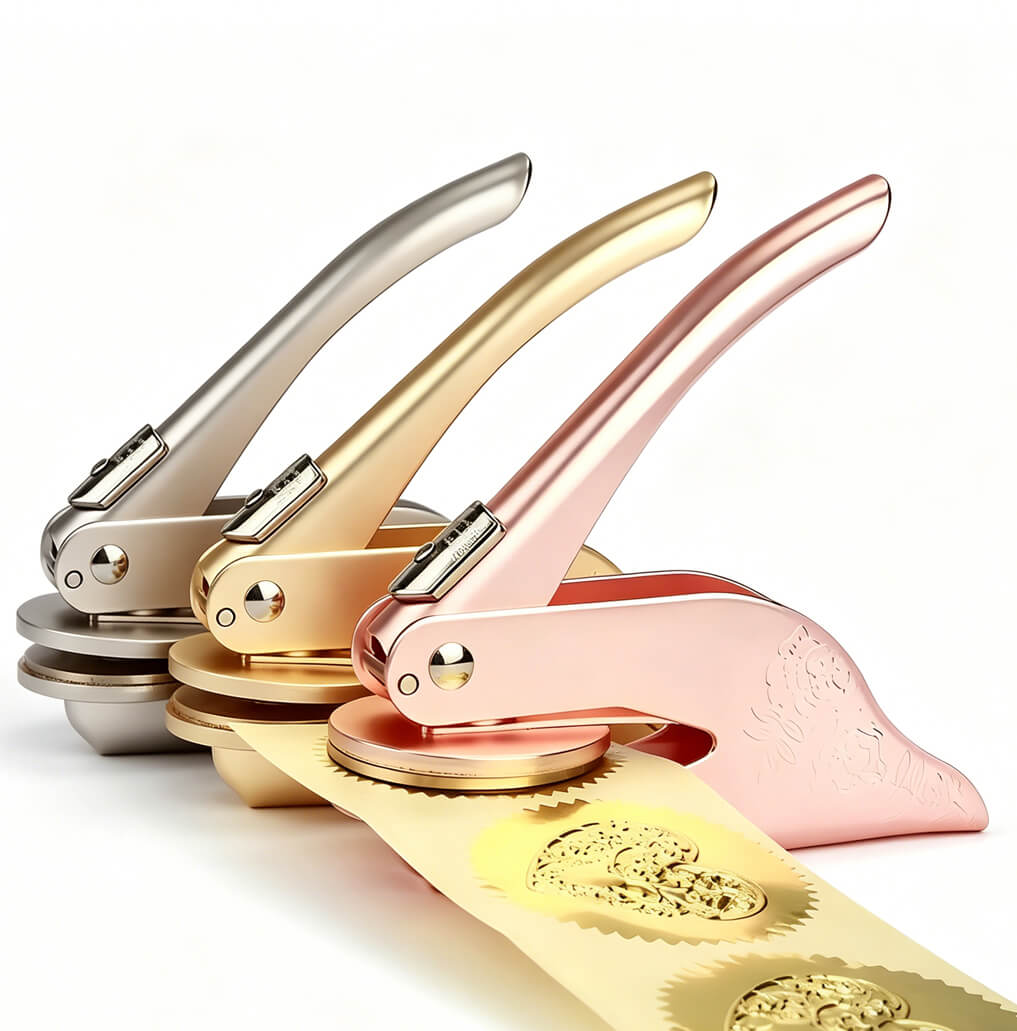
An embosser with just a name is practical. An embosser with a design that actually means something is personal in a different way. The best embosser designs for serious collectors tend to have one thing in common: they reflect something specific about the person who owns them, not just a generic book motif.
A reader who works through Japanese literature might choose the Koi Fish embosser because it ties their identity as a reader to an image with depth. A collector obsessed with celestial themes and star charts might reach for the Celestial Crystal. Someone who values the idea of transformation as a through-line in what they read might stamp every book with a butterfly motif and feel that choice every time they open the cover.
These are not arbitrary aesthetics. They are intentional signals, to yourself and to anyone who picks up the book, about who the owner is and what they care about.
Using Embossing Beyond Books
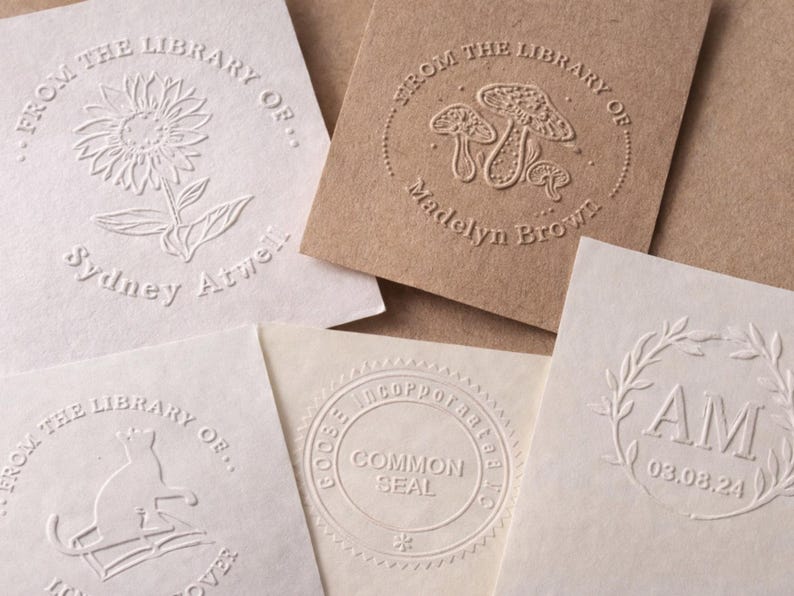
The most creative embosser users are not limiting themselves to book pages. Once you have the tool and a design you love, the surface possibilities open up considerably.
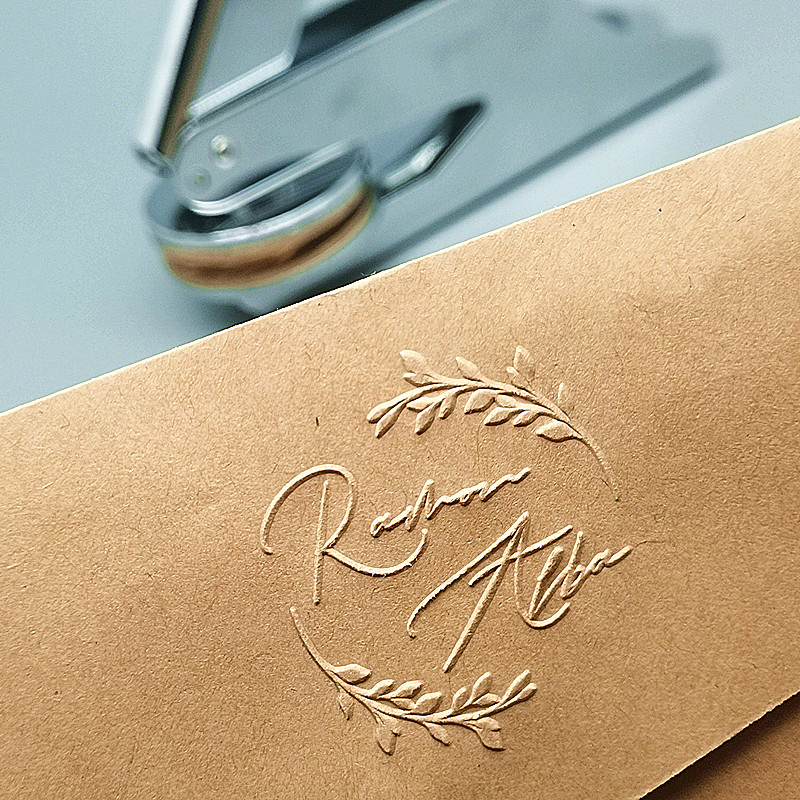
Kraft paper envelopes take a stamp cleanly. A handwritten note inside an envelope sealed with a wax stamp has become something of a cliche, but a handwritten note inside an embossed-sealed envelope feels genuinely personal and relatively rare. The raised impression on kraft gives a tactile quality that immediately communicates effort.
Stationery inserts for journal notebooks and planners are another natural fit. Many book lovers who also keep reading journals use an embosser on the inside cover of each journal, creating a consistent personal mark across an entire collection of notebooks rather than just books.
Gift wrapping made from uncoated craft paper can take an embossed impression on the outer panel. Stamping a gift wrap before tying it turns packaging into part of the present rather than an afterthought. For book lovers who give books as gifts, this combination creates a memorable presentation.
When Something Goes Off, Work With It
Experienced embossers know that not every impression comes out exactly as planned, and the response to that determines whether the result is a mistake or a character detail.
A slightly off-center impression on a page can actually look more handmade and intentional than a mechanically centered one. The human quality of a mild asymmetry is something machine-printed books do not have. Lean into it.
An impression that went slightly deeper on one side than the other creates a subtle three-dimensional tilt in the design that changes how light plays across the surface. In photographs of your collection, this kind of variation reads as texture and authenticity rather than imprecision.
The mental shift that matters is moving from a mindset where the embosser is a stamp that either works or fails, to one where the embosser is a tool producing handmade marks, and handmade marks have character. That shift changes how you evaluate your own results and makes the whole practice more enjoyable.
The Literary Identity Behind the Mark
There is a long tradition of personal library stamps that goes back well before embossers existed. Bookplates, ex libris labels, and ownership inscriptions in the front of books are centuries old. What the modern custom embosser does is give you a cleaner, more permanent, and more tactile version of that same practice.
The act of stamping a book with your embosser is less about marking ownership. It is about establishing continuity. Every book you stamp becomes part of the same collection, regardless of where it sits on the shelf. The raised impression is consistent across every title. Ten years from now, picking up any book in your collection will give you the same tactile experience of finding your mark inside.
That kind of continuity is what separates a collection from an accumulation of books. The embosser is the thread that runs through all of them.

Choosing an Embosser Design That Grows With Your Collection
One question that comes up is whether to get a simple name-only embosser or one with a more elaborate design. The honest answer depends on how you use your books.
If you lend books frequently and want a functional mark that is easy to spot, a clean name-based design stamped consistently in the same place works well. The simplicity makes it easy to identify without requiring anyone to examine the design closely.
If you are building a collection you intend to keep and care for over a long time, a design that reflects something genuine about your relationship with books adds meaning every time you use it. The Owl Wings design, for example, works for readers who see themselves as night-time readers and thinkers. The Swirl Butterfly works for those who gravitate toward themes of change and transformation in what they read. The Open Book Butterfly works for readers who want to communicate directly that they are, above everything, someone who reads.
The best embosser design is the one you will want to use on every book for the next decade, not simply the one that looks good in product photos.
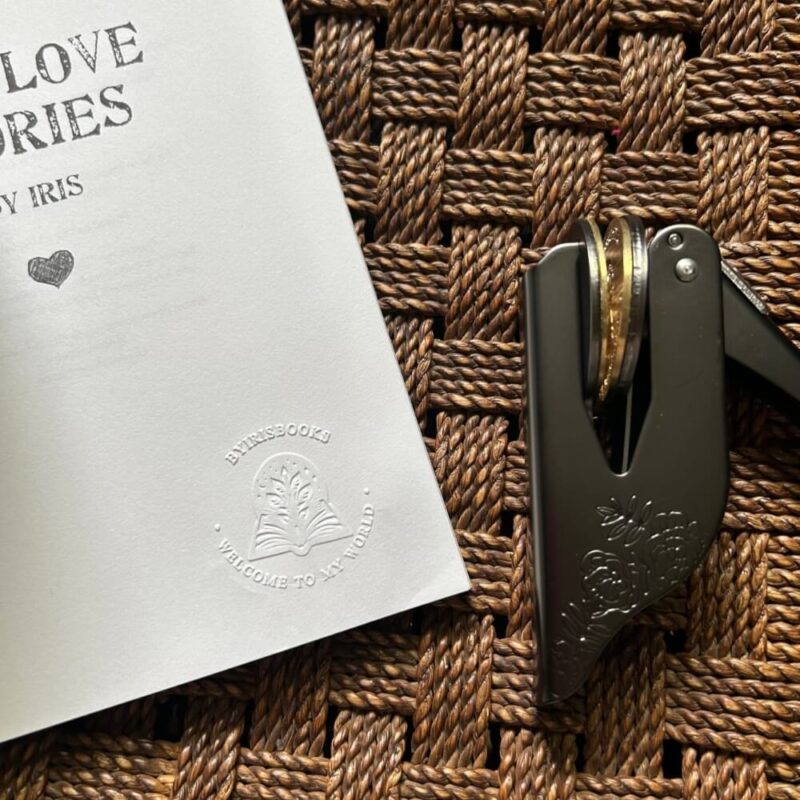
A well-chosen embosser used consistently is one of the quieter ways to build something that lasts. It does not need to announce itself. It just needs to be there, on the inside of every book you own, doing its job of connecting your library into something cohesive.
The creativity in how you use it is yours to define.
Browse All Custom Book Embossers
 New Arrivals
 Best Sellers
 All Product
 Latest deals