
No products in the cart.


Book Lover Gifts, Crafting Guides, Personalized Stationery
How to Use a Custom Book Embosser: A Step-by-Step Guide for Every Book Lover
You open the box, hold this small metal tool in your hand, and then you stare at your most beloved hardcover sitting on the shelf, and you freeze.
What if you press it wrong? What if the impression is crooked? What if you somehow damage the book?
These are all very reasonable concerns. The first time you use a book embosser, it helps to know exactly what you are doing – not because the tool is complicated, but because books feel precious and you do not want to mess up a page you actually care about.
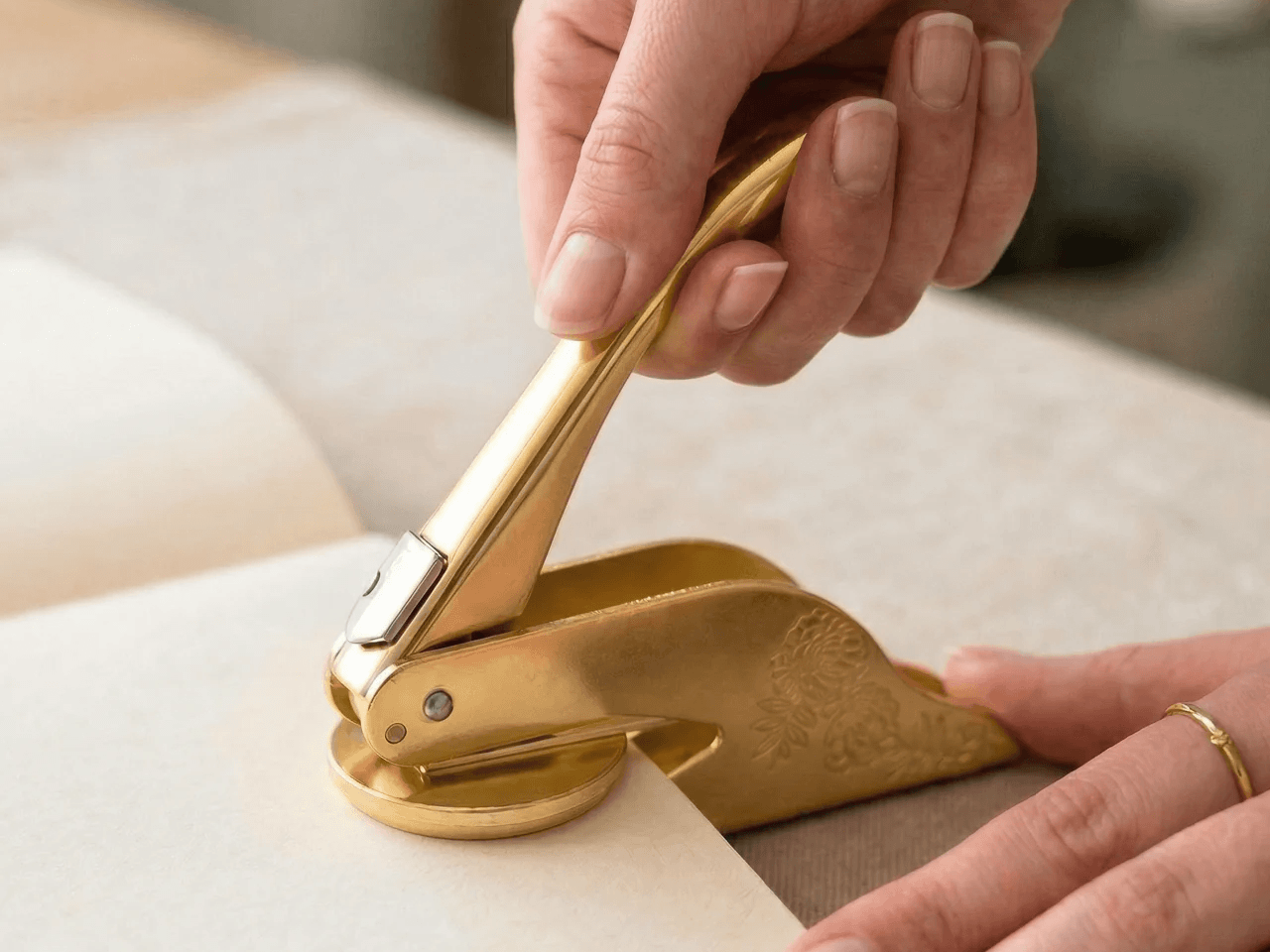
Here is the good news: book embossers are not hard to use. The whole process takes about thirty seconds once you know the steps. This guide will walk you through everything.
Before we get into the steps, let us talk about the tool itself. A custom book embosser is a handheld press that leaves a raised, ink-free impression on paper. You choose your design, load it into the embosser, and press down firmly. That is it. No ink, no mess, no smudges. The impression is physical – you can feel it with your fingertip, which is honestly the best part.
Step 1: Find Your Practice Page
This is the step most people skip and then regret.
Do not press your new book embosser onto a book you care about the first time you use it. Grab a stack of scrap paper instead – junk mail, old notebooks, receipts from the grocery store, whatever is lying around. You are not trying to feel guilty here; you are trying to find the sweet spot.
Every embosser has a particular amount of pressure it needs. Too light and the impression is faint. Too hard and you might tear thin paper or create an impression that bleeds beyond the design. On your practice pages, experiment with how hard you need to press and how long you need to hold to get a clean, crisp result.
Once the impression on your scrap paper looks sharp and fully pressed, you are ready.
Step 2: Choose Where to Stamp – And Why It Matters
This is the part that divides book lovers.
There are two spots people generally choose for their book embosser stamp.
The flyleaf is the first blank page inside the cover – the one you see when you open a hardcover book. It is clean, it is visible, and it is where most people put their stamp.
The title page is where the author and publisher information lives, usually on the right-hand side near the front. Some readers prefer stamping here, placing their personal mark next to the authors name. It feels like a quiet collaboration between you and the writer.
Either works well. What you want to avoid is stamping on pages with heavy ink, glossy finishes, or textured paper. The flatter and smoother the page, the cleaner the impression will be. Standard book paper – the kind most mass-market and trade paperbacks use – works perfectly.
Step 3: Align Before You Press
This is where people get into trouble.
Most book embossers are designed to work at the bottom of the page. Before you press, slide your page into the embosser and check that the embosser plate is facing the right direction. If the design is reversed, your impression will be upside down – which is not the end of the world on a practice page, but is genuinely disappointing on your favorite edition.
Take a moment to check. Most embosser mishaps come from skipping this step, not from pressing too hard.
A good habit is to position the embosser so the stamp will sit toward the bottom center of your page. That is the natural resting point and it is the most visually balanced spot for most book designs.
Step 4: Press Firmly and Hold
Here is the part that actually takes courage.
Once you are aligned, place the page in the embosser. Grip the handles firmly. Press down with steady, even pressure and hold for about two to three seconds. Then release slowly.
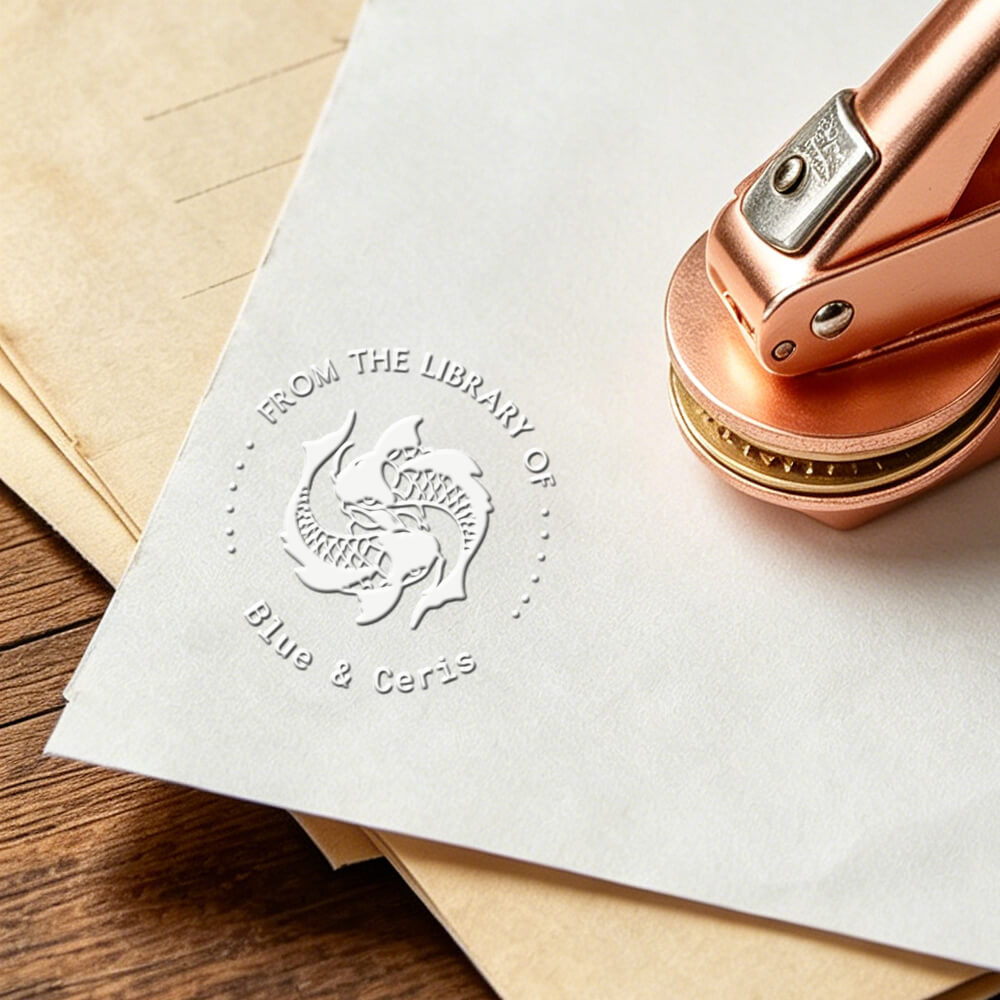
What you will find is that the sensation of pulling that page out and seeing your personal stamp looking back at you is genuinely satisfying. The raised texture catches the light differently depending on the angle, and there is something deeply satisfying about physically marking a book as your own.
A few things to keep in mind as you press.
Standard paper works best. If you are working with particularly thick cardstock or stiff paper, the impression may come out lighter than you expect. That is normal. If the impression is uneven, check that the embosser plate is seated properly and that you are pressing on flat, smooth paper.
Some minor paper fiber lift at the edges of the impression is completely normal on personal embossers and does not indicate a problem with the tool.
Step 5: A Few Things to Keep in Mind
Press one page at a time. Your embosser is not a stapler. Trying to press through multiple pages at once will give you an inconsistent impression and is not good for the tool.
Avoid using it on very heavy cardstock or hardcover cases. Most personal book embossers are designed for standard book paper. If you want to stamp on thicker material, a dedicated embossing machine is a better choice.
Do not rush. Part of the pleasure of owning a book embosser is the small ritual of it. You take the book, you align the page, you press, and you look at what you just made. That pause is part of the experience.
One More Thing – Label Stickers
If you lend books regularly or give them as gifts, you might also want to consider a set of companion label stickers to use alongside your embosser. The Embosser Companion Blank Label Stickers are designed to work perfectly with book embosser stamps – they give you a clean, flat surface for your impression and then become a neat little label you can affix inside the front cover or on the first page.
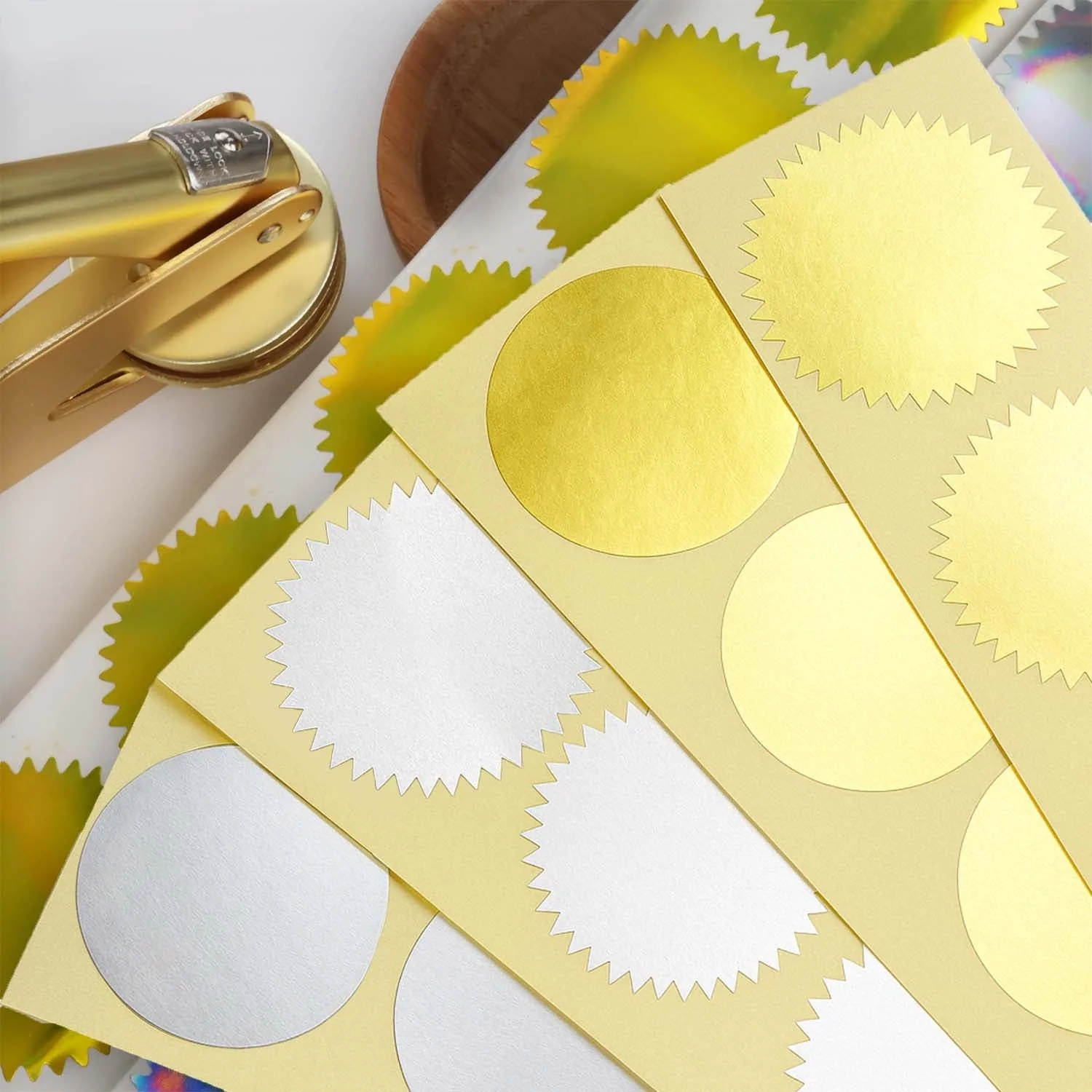
Or, for a more natural look, the Kraft Label Stickers pair nicely with the Koi Fish Embosser in particular – the organic brown paper tone complements the flowing koi design really well.
A Book Embosser Is a Promise to Your Books
There is something quietly romantic about stamping the inside of a book. It says: this one is mine. I have read it, or I intend to read it, and either way it belongs on this shelf, in this order, in this collection that I have built over time.
The Custom Swirl Butterfly Embosser is another design worth browsing if you want something with movement and flow – the swirling butterfly pattern has an organic quality that looks equally at home on a vintage paperback and a new hardcover.
Your books know the difference. So will you.
Browse the full collection of Custom Book Embossers at SumFlyingCraft, including the designs featured in this guide. Every embosser ships from the workshop to your door.
Looking for the right embosser for your collection? Browse all Custom Book Embossers and find a design that feels like it was made for your shelf.
 New Arrivals
 Best Sellers
 All Product
 Latest deals