
No products in the cart.


Paper Crafting Tips, Book Lover Gifts, Crafting Guides
What Materials Work Best with a Custom Embosser? A Practical Guide

You have your custom embosser in hand. You know roughly how to press it. But then someone asks: does it work on this type of paper? What about that leather notebook cover? Can you stamp vellum without tearing it?
These are the questions that never make it into the product listings. So here is a straightforward breakdown of which materials actually work well with a custom embosser, which ones need a bit of extra care, and which ones you should probably skip.
Standard Paper: The Most Reliable Surface
Plain paper is where most embossers feel most at home. A standard 80gsm to 120gsm sheet gives the brass plates enough resistance to hold a clean raised impression without tearing. If you are stamping inside a notebook or on loose sheets of stationery, you are working with the ideal material.
One thing that surprises a lot of people: thinner paper actually works better than very thick cardstock for getting sharp detail. Cardstock above 250gsm can resist the plates rather than conforming to them, which leads to soft or incomplete impressions. If you are stamping on thick card, press harder and hold for a full three seconds before releasing.
For standard paper, the sweet spot is:
- Notebook interior pages
- Writing paper and stationery sheets
- Journal inserts
- Cardstock up to around 200gsm with firm, even pressure
Book Pages: Where Most People Start
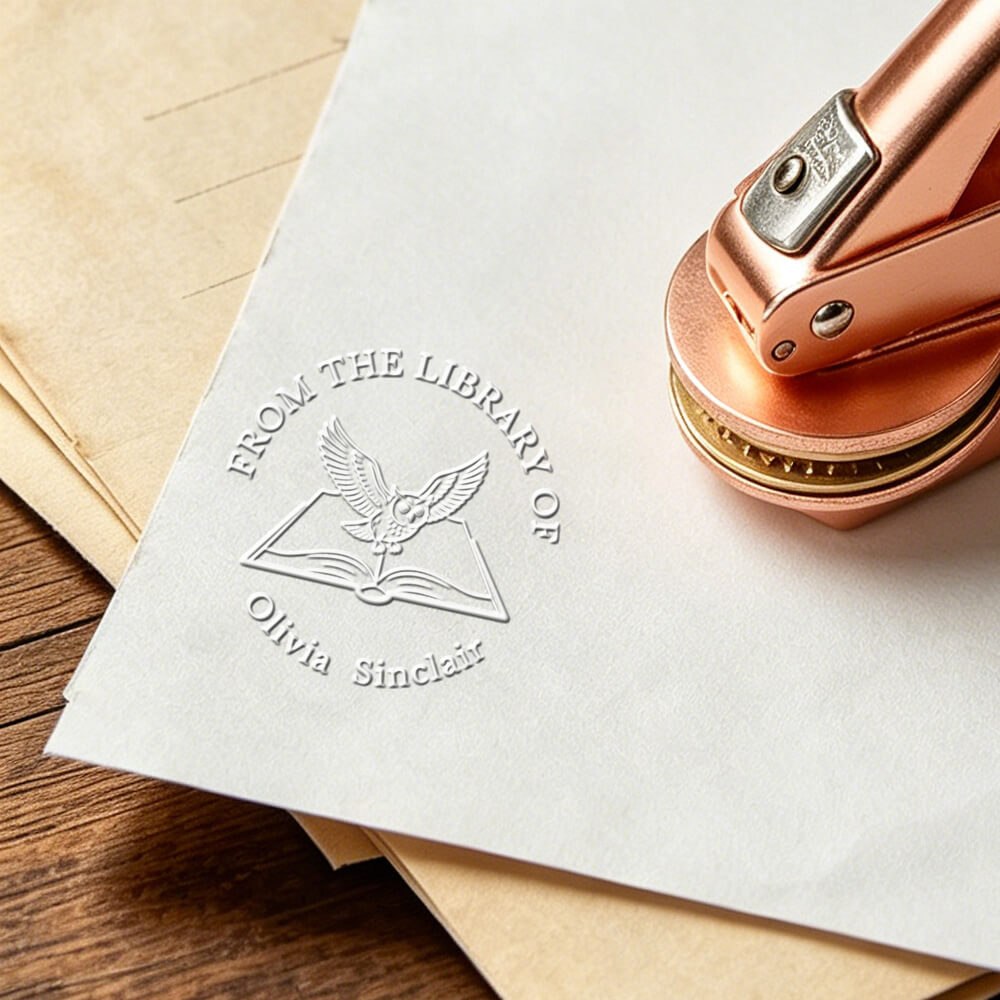
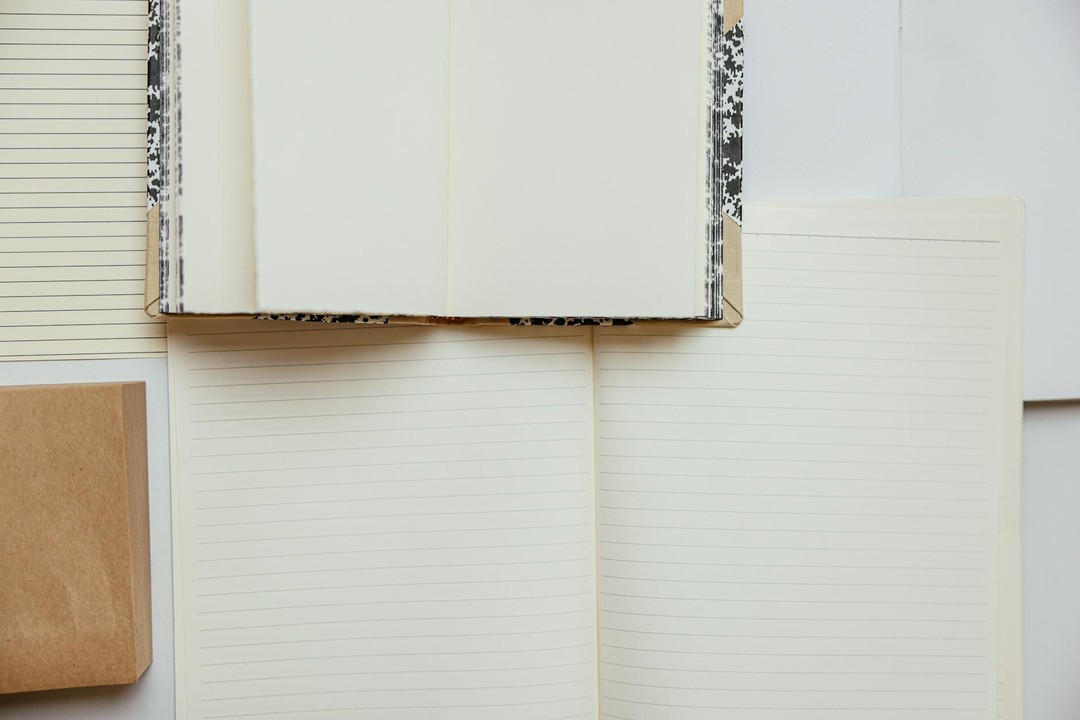
Stamping the first blank page of a book is the classic use case, and it works beautifully. The paper inside most hardcover and paperback books sits right in the ideal weight range. The slight give from the binding also acts as a natural cushion, which actually helps the plates press more evenly.
A few tips worth knowing before you stamp a page you cannot undo:
- Place at least five to six pages beneath your target page. Stamping with too few pages underneath means the impression sinks too deep and the pages below get marked too.
- Stamp on the first blank endpaper if the book has one. This gives you clean white space without touching the printed content.
- Do not press at a corner or tight edge. Center the stamp at least 1cm from the page edge to avoid tearing.
Vellum and Translucent Papers: Handle with Care
Vellum has a look that is hard to beat for formal stationery or envelope liners. The semi-transparent surface holds an embossed impression well and the raised detail catches light in a way that reads as elegant rather than crafted.
The challenge with vellum is that it has almost no tolerance for repeated pressure or repositioning. You get one shot. Place the sheet carefully, double-check alignment, then press firmly with one clean motion. Any attempt to re-stamp the same spot will show as a distorted ghost impression.
Vellum weight also matters. Anything below 90gsm is too fragile and likely to crease or tear at the plate edges. Standard 100gsm to 120gsm translucent vellum is the most reliable option.
Leather and Faux Leather: Possible, but Different
Real leather and good quality faux leather can take an embossed impression, but the result looks different from what you get on paper. The impression tends to be shallower and the detail less sharp, because leather has more natural give than paper and absorbs some of the pressure rather than deforming cleanly around the plates.
That said, it does work. A few things help:
- Lightly dampen the surface with a barely-moist cloth before pressing. Slightly damp leather conforms better to the plate shapes.
- Hold the embosser down for five to six seconds instead of the usual two or three.
- Thinner leather surfaces work better than thick ones. The cover of a journal or the flap of a notebook pouch is more workable than a thick leather binding.
Faux leather behaves similarly. The texture of the material matters more than the material itself. Smooth, fine-grained surfaces give cleaner results than heavily textured or pebbled ones.
Fabric: Mostly a No-Go
Fabric and textile surfaces do not hold embossed impressions well. The fibers flex and spring back rather than retaining the deformed shape that creates the raised look. Some very tightly woven fabrics with a smooth, almost paperlike surface can show a faint impression, but it fades quickly and does not look intentional.
If you want to mark fabric items like book bags or pouches, a heat stamp or iron-on approach is more appropriate than a handheld embosser. The embosser is designed specifically for compressible surfaces like paper, thin card, and certain leathers.
Envelopes and Packaging: A Surprisingly Good Fit
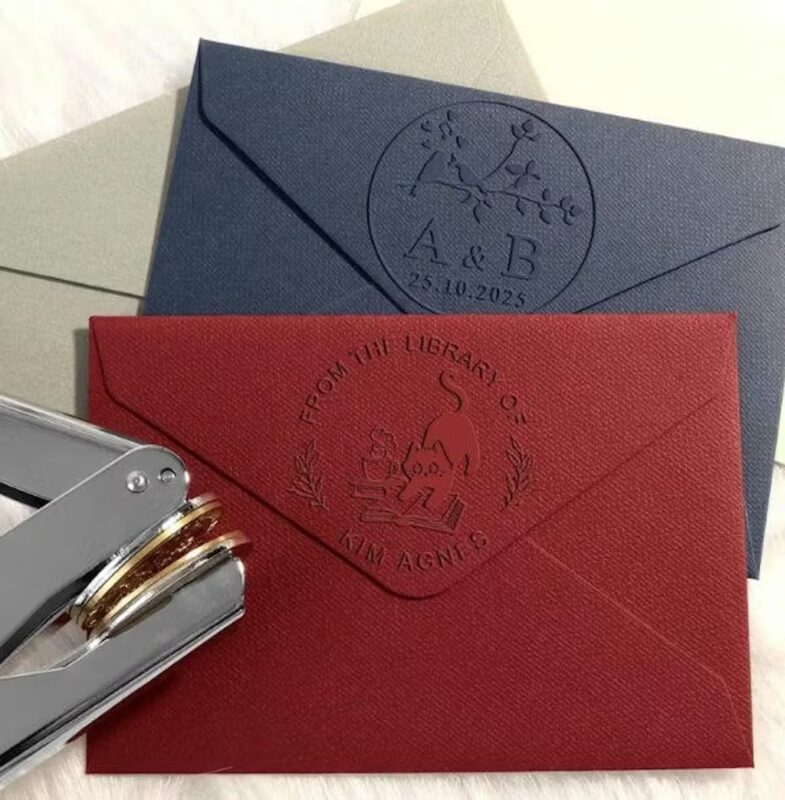
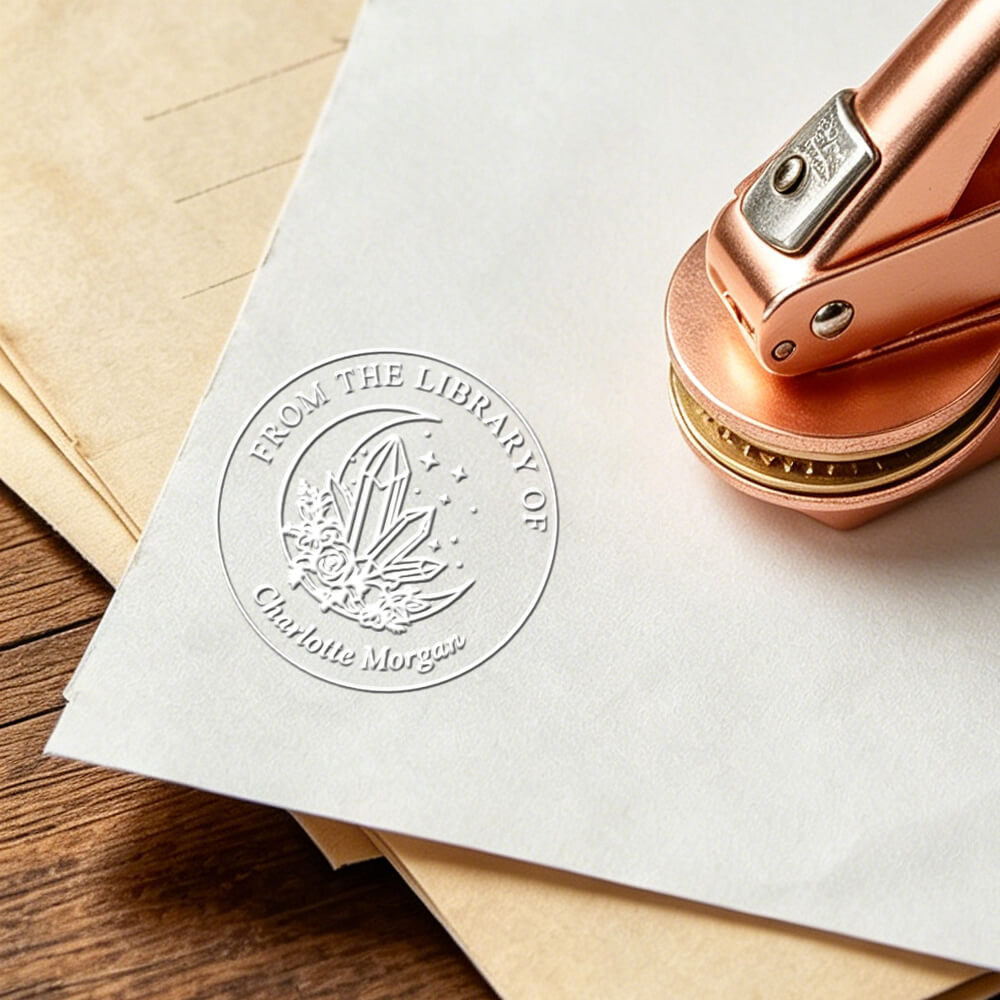
Envelopes are an underused surface for embossing. The paper is usually in the right weight range, the flat surface makes alignment easy, and a personal embossed seal on the back of a card envelope immediately upgrades the look of handwritten mail.
Kraft paper envelopes work especially well because the slightly textured surface actually helps the impression hold. White and cream envelopes with smooth coatings also work, though very glossy or heavily coated envelopes resist the plates in the same way as thick cardstock.
For small boxes and gift packaging made from uncoated card, embossing can add a premium touch without needing ink or foil. Stamp on the top panel and the impression reads as clean and intentional.
A Quick Reference: Materials at a Glance
| Material | Result | Notes |
|---|---|---|
| Standard paper (80-120gsm) | Excellent | Best overall result, sharp detail |
| Book pages | Excellent | Use 5+ pages underneath for support |
| Vellum (100-120gsm) | Good | One shot only, no repositioning |
| Cardstock (up to 200gsm) | Good | Press harder and hold longer |
| Kraft envelopes | Good | Texture helps impression hold |
| Thin leather / faux leather | Fair | Dampen slightly, hold 5-6 seconds |
| Heavy cardstock (250gsm+) | Poor | Too thick, detail often incomplete |
| Fabric / textile | Not recommended | Fibers spring back, impression fades |
One Last Thing Worth Knowing
The condition of your paper matters just as much as the type. Damp or humid paper loses its structure and tends to crease around the plates rather than holding a clean impression. Glossy coated paper can sometimes look good in theory but resists the plates the same way thick cardstock does.
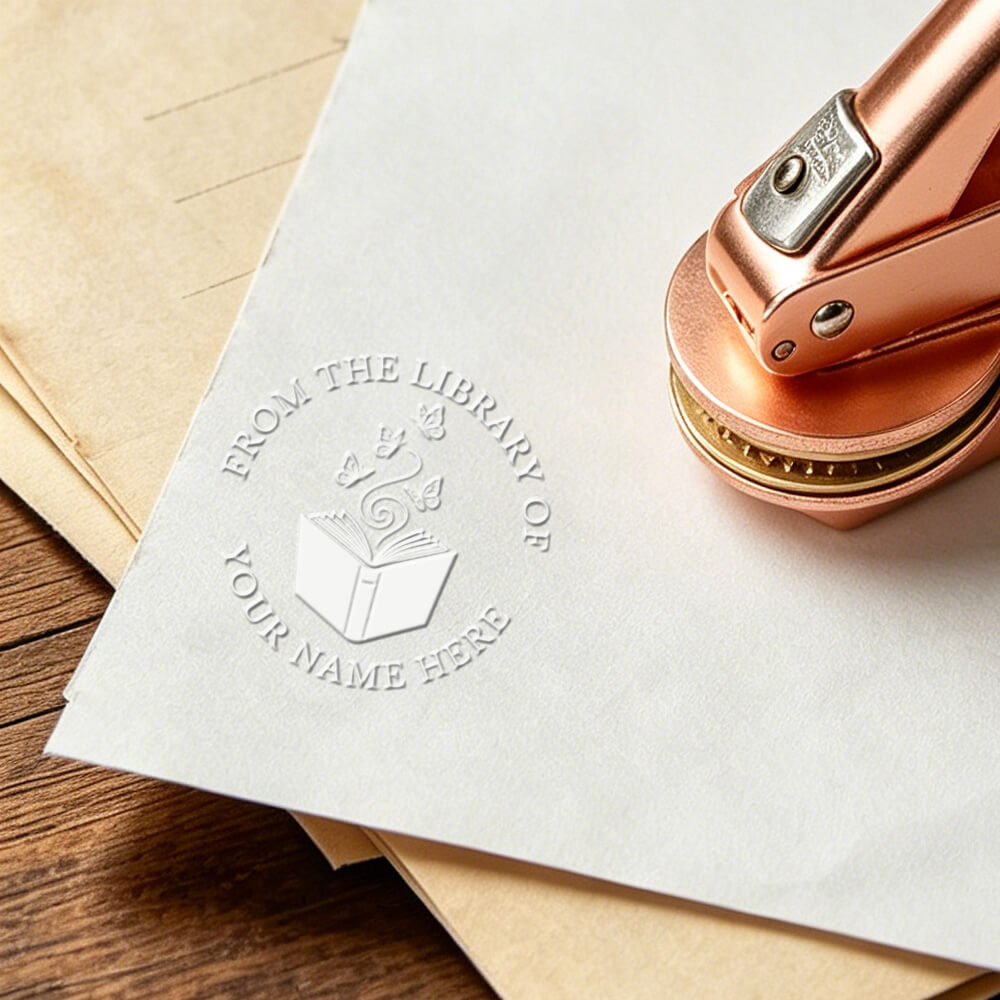
If you are experimenting with a new material, always test on a scrap piece first. The test costs you nothing and tells you within seconds whether the surface will cooperate. A little scrap paper trial run is worth far more than discovering the issue on the first page of a book you care about.
Our custom embossers use solid brass plates that hold fine detail across a wide range of surface types. But the material you stamp on is doing half the work. Choose it carefully and the impression will speak for itself.
 New Arrivals
 Best Sellers
 All Product
 Latest deals