
No products in the cart.


Shopping Guides
What Dies Should a Beginner Buy First? The Essential Starter Guide
If you asked ten experienced card makers what they’d buy if starting from scratch, nine of them would say the same thing: circles, rectangles, and one good border die. The tenth might argue for florals first, but the core list never changes much. That’s because the best beginner dies are the ones you reach for on every single project, not the ones that look pretty in the package.
Here’s the short version: start with nesting shapes (circles and rectangles), a basic border die, one layered floral die set, a sentiment die, and one background panel die. These five categories give you enough range to build complete cards and layouts without spending a fortune on dies you’ll rarely use.
If you’ve just unboxed your first die cutting machine and are staring at hundreds of die options online, you’re not alone. The sheer variety can feel overwhelming: florals, animals, alphabets, detailed mandala cuts, slimline panels, shaker windows. When you’re figuring out what dies should a beginner buy first, the options can paralyze you before you’ve made a single cut.

This guide cuts through the noise. We’ll walk through exactly which dies to buy first, in what order, and why. Every recommendation here is based on two simple rules: versatility first, and one die, many projects. According to the Craft & Hobby Association, paper crafting continues to be one of the fastest-growing creative hobbies worldwide — which means more die options than ever, and more reason to start with a focused plan.
Why Your First Die Purchase Matters More Than You Think
Many beginners fall into the same trap: buying a beautiful, detailed die on impulse, using it once, and then struggling to fit it into other projects. That $25 die now sits in a drawer because it only works for birthday cards in shades of purple.
The dies you buy first set the tone for your entire crafting experience. The right starter dies give you:
- Immediate creative gratification: you can finish a project the same day you start it
- A foundation to build on: basic shapes pair with almost any theme die you add later
- Better value per use: a rectangle nesting die might cost $12 but get used in 80% of your projects
By contrast, specialty dies (Christmas trees, Halloween bats, wedding cake toppers) are great additions, just not as your very first purchases. Start with the workhorses, then sprinkle in the fun stuff. Start with the workhorses, then sprinkle in the fun stuff.
The 8 Essential Die Types Every Beginner Should Buy First
1. Nesting Circle Dies: Your #1 Must-Have
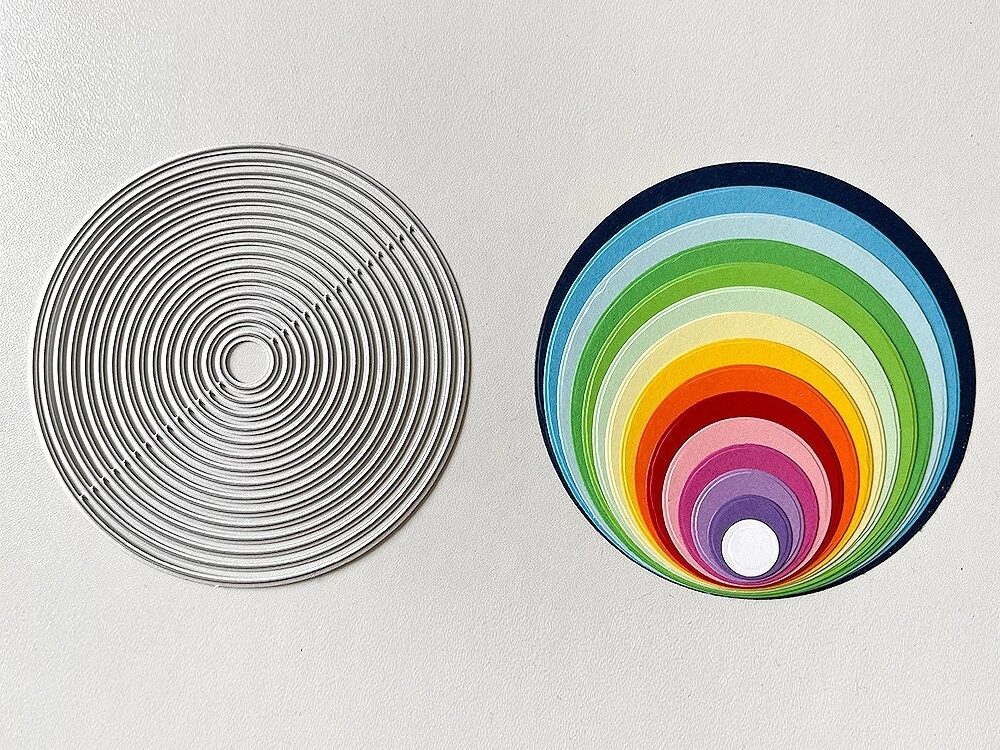
Ask any experienced card maker what they’d buy if starting from scratch. Nine times out of ten, the answer is a circle die set. That’s because circles show up on nearly every project: as mats behind sentiments, as windows for shaker cards, as accents on tags and layouts.
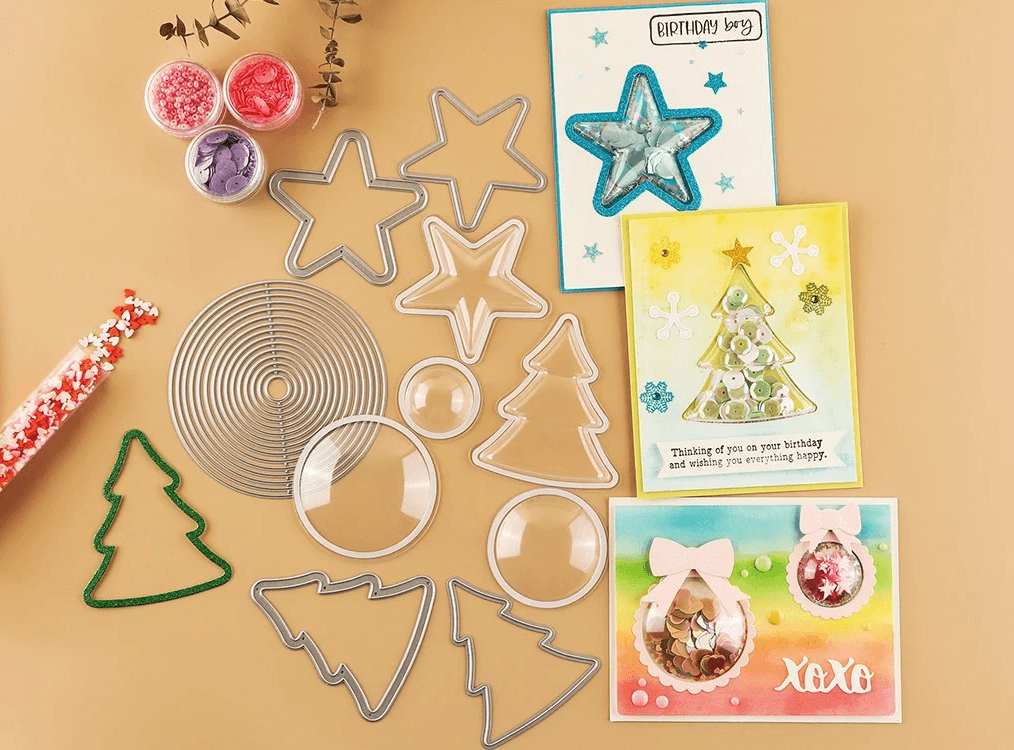
Why you need them: Circles are the most universally used shape in card making and scrapbooking. You’ll use them for sentiment mats, center-piece framing, layered backgrounds, shaker card windows, and gift tags.
Nesting dies give you multiple sizes in one set: typically 5 to 8 graduated circles. This means one purchase covers everything from a 1-inch accent dot to a 4-inch card panel.
What to look for:
- A set with at least 5 graduated sizes
- Plain edges (no scallops or stitching) for maximum versatility
- Carbon steel construction for clean, consistent cuts
Projects you can make with just circle dies:
- Layered birthday cards with graduated circle mats
- Monogram initial cards using a large circle as the backdrop
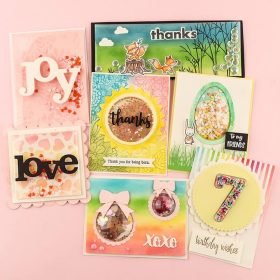
- Shaker cards with a circle window frame
- Simple gift tags
Tip: Place your circle die slightly off-center on patterned paper to create a framing effect that draws the eye. This simple trick makes even basic cards look intentional and polished.
2. Nesting Rectangle Dies: The Foundation of Every Card
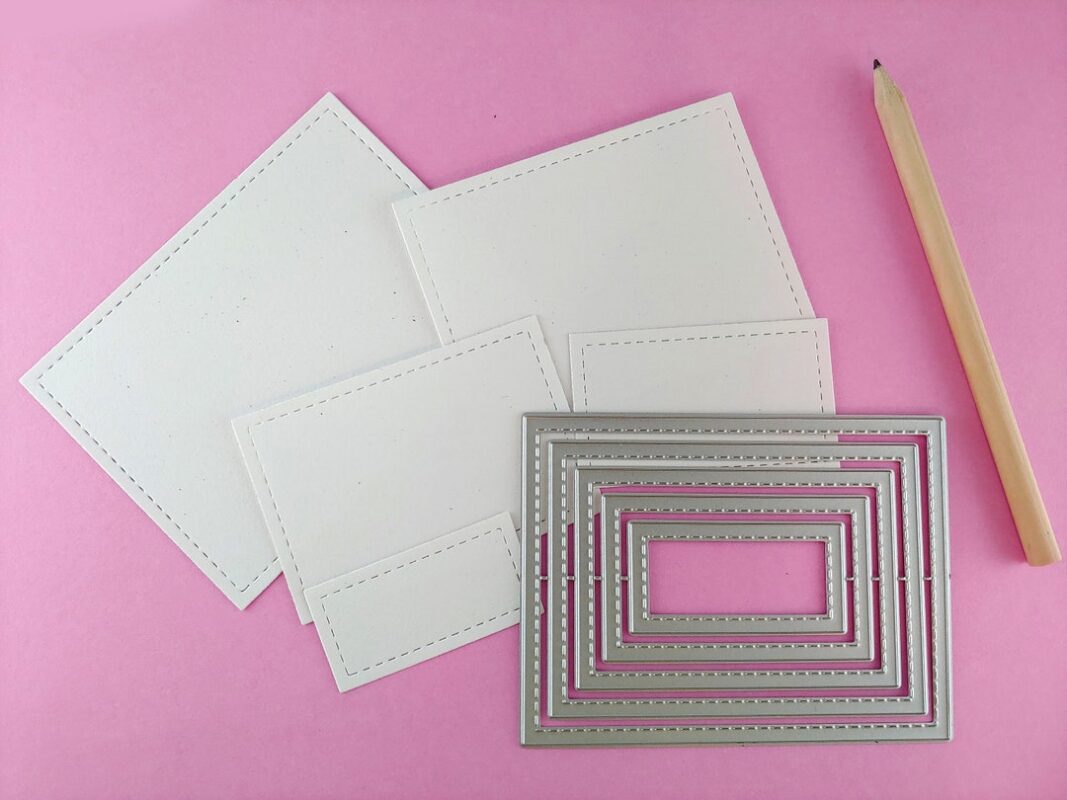
Why you need them: Most standard greeting cards are rectangular (A2 or A7 size), and rectangular dies create the panels, mats, and layers that give cards their structure. Without rectangles, building a card layout is like building a house without a frame.
What to look for:
- A set that includes sizes matching standard card bases (4.25″ x 5.5″ and 3.75″ x 5″ for A2 cards)
- Stitched edge options for a subtle decorative touch
- At least 4–5 sizes per set
Pro move: Buy both a plain-edge and a stitched-edge nesting rectangle set. Use the plain ones for background layers and the stitched ones for the top decorative layer. The stitching detail adds dimension without overwhelming your design.
3. Basic Border Dies: Instant Elegance
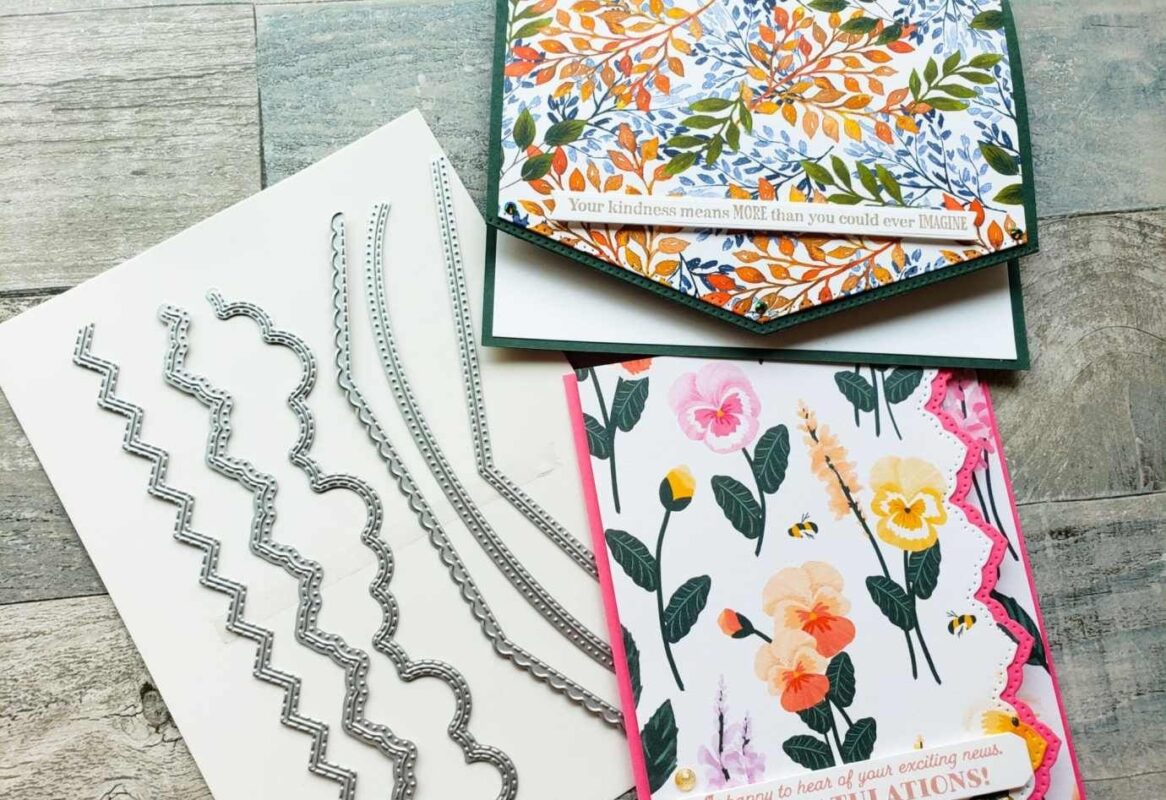
Why you need them: A border die transforms a plain card edge into something finished and intentional in a single pass through your machine. It’s the fastest way to elevate a simple design.
Start with one or two classic border styles. A scallop edge and a straight stitched edge cover 90% of card making scenarios.
What to look for:
- Full card-width borders (at least 5.5″ long for standard cards)
- Designs that aren’t too dense: tight details are harder to cut cleanly as a beginner
- Versatile patterns that work for any occasion, not just holidays
Quick project idea: Cut a scallop border from a contrasting color cardstock, layer it along the bottom edge of a card panel, and add a circle-framed sentiment on top. That’s a complete card design using just three die types.
4. Layered Floral Dies: One Set, Countless Projects
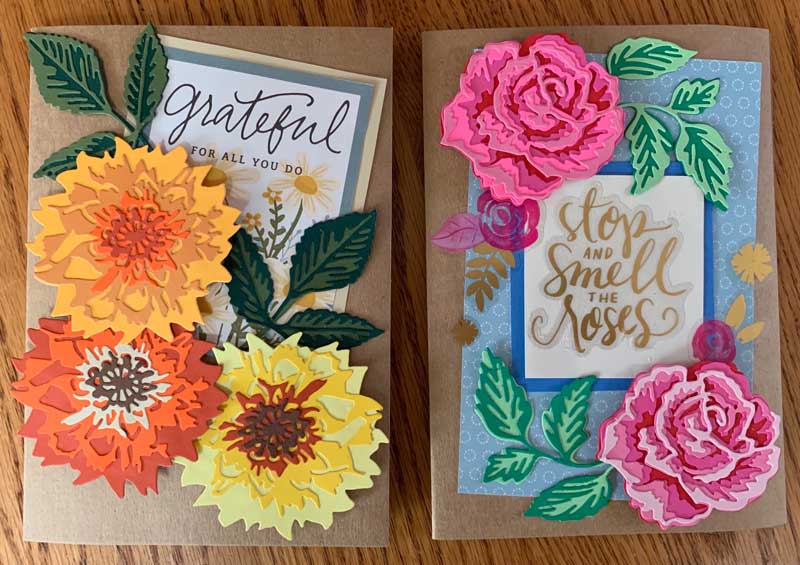
Why you need them: Flowers are the most popular motif in paper crafting, period. They work on birthday cards, thank you cards, sympathy cards, wedding projects, Mother’s Day designs, and everyday just because creations.
Layered floral dies come with multiple pieces that stack to build a dimensional flower. You cut each layer from a different shade, assemble them with adhesive, and the result looks hand-painted.
What to look for in your first floral set:
- 3–5 piece layering design (not a single-outline flower: those are harder to use creatively)
- Medium scale (flowers roughly 2–3 inches when assembled)
- Includes coordinating leaves or greenery pieces
- A design that doesn’t look overly complex to assemble
Assembly tip: Use a fine-tip liquid glue rather than tape runner for layered flowers. The precision tip lets you place small dots exactly where you need them without adhesive seeping out the edges.
5. Sentiment Word Dies: “Happy Birthday” in One Pass
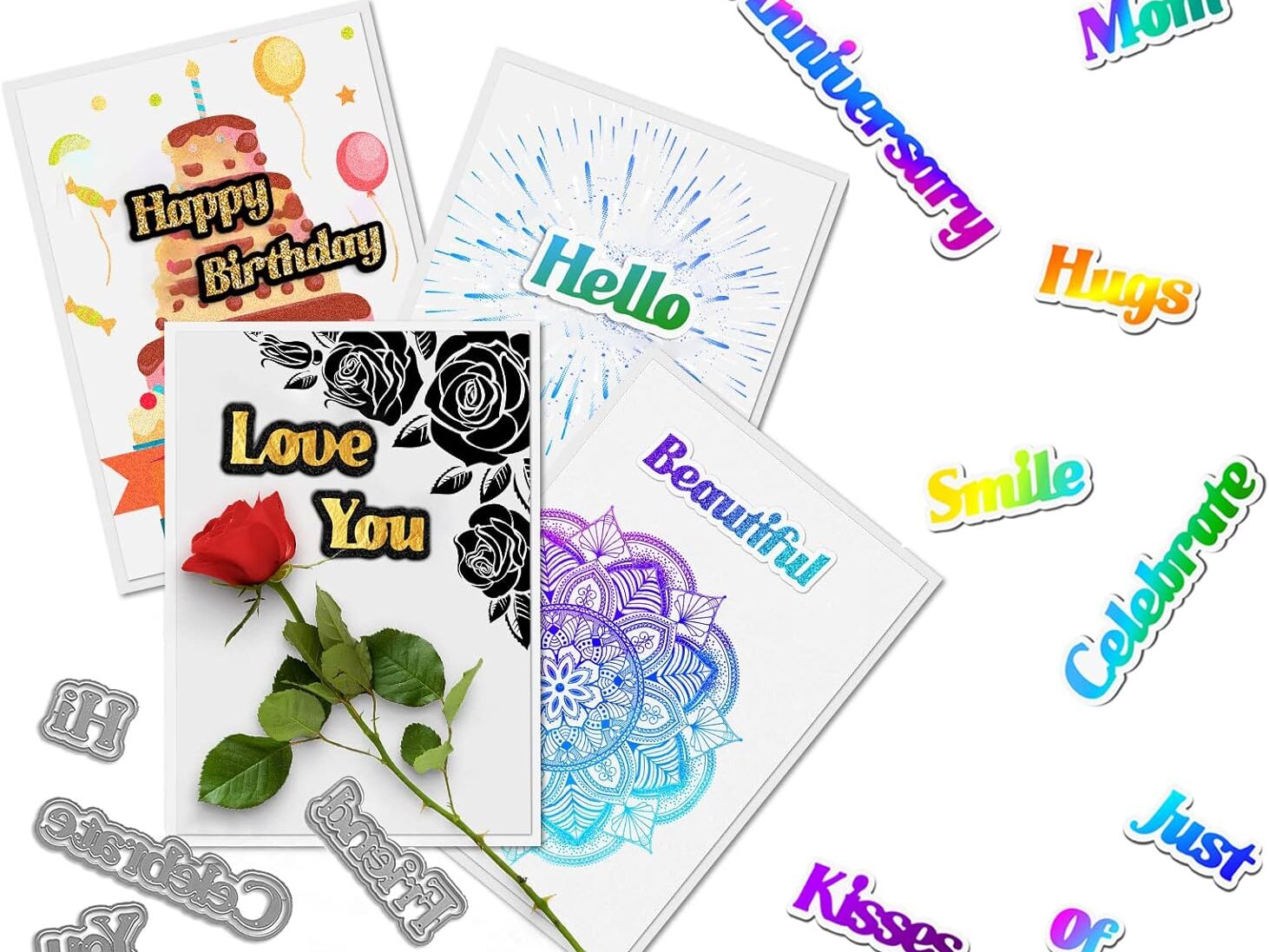
Why you need them: Hand-lettering sentiments is time-consuming and the results are inconsistent. A sentiment die cuts a perfectly crisp word or phrase every single time, and you can cut it from any color or patterned paper you own.
What to look for:
- A set that includes 3–5 of the most-used phrases: Happy Birthday, Thank You, With Love, Thinking of You, and Congratulations
- Script or handwritten fonts that feel warm and personal
- Die size proportional to standard card panels (not too large, not too tiny)
Budget alternative: If individual sentiment die sets feel expensive, look for a sentiment strip die, a single die that cuts a rectangular banner containing the words. You get multiple sentiments in one purchase.
6. A Simple Background Panel Die: Texture Without the Effort
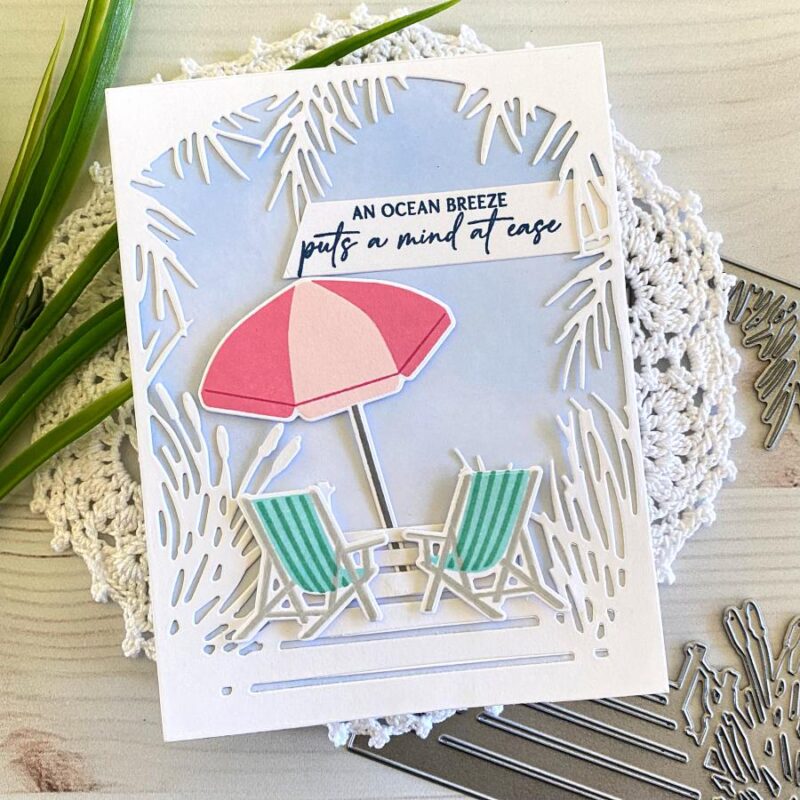
Why you need them: Background panel dies cut an entire card front into a patterned design, dots, lines, geometric shapes, or delicate cutwork. They turn a flat piece of cardstock into the star of your card with zero additional effort.
What to look for in your first background die:
- A design that’s not too dense: very tight patterns can tear thin cardstock
- A2 or standard card size (4.25″ x 5.5″)
- A versatile pattern that works year-round (geometric, dots, or abstract lines: not holiday-specific)
Color trick: Cut your background panel from white cardstock, then place a bright colored panel behind it. The color shows through the cutout spaces, creating a bold, colorful result that shifts completely when you swap the background color.
7. Tag Dies: The Multitool You Didn’t Know You Needed
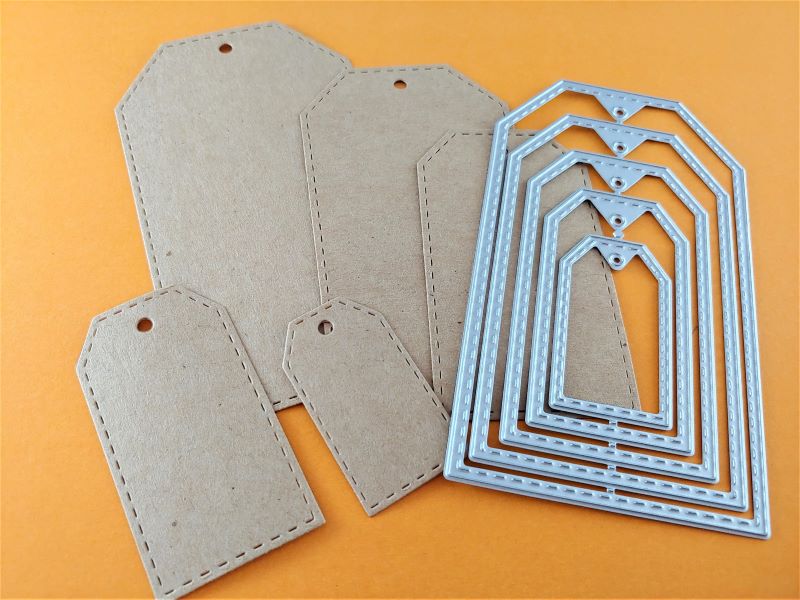
Why you need them: Tag dies serve triple duty: they work as card centerpieces, gift tags, and scrapbooking accents. A good tag die set includes the tag shape plus a reinforcement piece for the hole, giving you a finished, professional look.
What to look for:
- 2–3 graduated sizes
- A simple, classic shape (no decorative edges on your first set, keep it versatile)
- Includes a top-fold option for cards that open
Creative uses beyond tags:
- Layer a small tag on top of a larger circle for a layered centerpiece on your card
- String multiple small tags together as a decorative banner
- Use the negative space (the leftover cardstock after cutting a tag) as a stencil
8. One Small Seasonal Die Set: For Motivation and Fun
Why you need it: This is your treat yourself purchase. After covering all the basics above, pick one small seasonal or themed die set that genuinely excites you, whether that’s hearts for Valentine’s Day, stars for celebration cards, or autumn leaves for fall projects.
The rule: Keep this to one small set (under $15). It’s there to keep you motivated and remind you why you started crafting, not to drain your budget before you’ve built your foundation.
A Realistic Beginner Die Budget Breakdown
You don’t need to buy everything at once. A phased approach spreads the cost over a few weeks while still giving you creative options from day one:
Phase 1: Your First Day (approx. $30–45):
| Die Type | Approximate Cost |
|---|---|
| Nesting circles | $10–15 |
| Nesting rectangles (stitched) | $12–18 |
| 1 basic border die | $8–12 |
Phase 2: Week 2 (approx. $25–40):
| Die Type | Approximate Cost |
|---|---|
| 1 layered floral die set | $15–25 |
| 1 sentiment die or strip set | $10–15 |
Phase 3: Month 1 (approx. $20–35):
| Die Type | Approximate Cost |
|---|---|
| 1 background panel die | $12–20 |
| 1 tag die set | $8–15 |
Total estimated investment: $75–120 for a complete beginner die collection that covers virtually any card making project you’d want to tackle.
Compare that to buying impulse dies one at a time without a plan. Most crafters report spending $200–300 before they feel like they have a “useful” collection. I’ve seen people spend over $400 before realizing half their dies never come out of the storage box. Starting with purpose saves both money and frustration.
Matching Dies to Your Machine: A Quick Compatibility Check
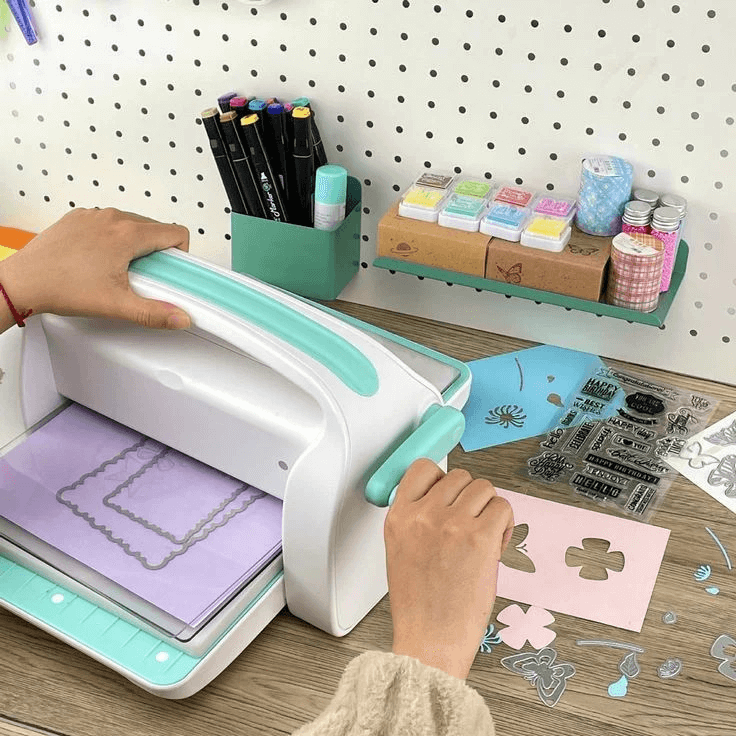
One thing many guides overlook: not every die works with every machine. Before you buy, take 30 seconds to check your machine’s maximum cutting width. According to Scrapbook.com’s die cutting guide, most manual machines handle dies up to 6 inches wide, while wider-format machines like the Sizzix Big Shot Plus accommodate up to 9 inches.
Quick reference:
- Cricut Cuttlebug / Sizzix Big Shot: dies up to 6 inches
- Sizzix Big Shot Plus / Big Shot Pro: dies up to 9 inches
- Spellbinders Platinum: dies up to 8.5 inches
When choosing best dies for beginners, focus on sets that fit within your machine’s cutting width. A beautiful die that doesn’t fit your machine is money wasted.
3 Dies Beginners Should Skip (For Now)
Just as important as knowing what to buy is knowing what to skip when choosing dies for beginners. These die types are popular but not ideal first purchases:
1. Fine lace or mandala dies. These require perfect sandwich calibration, specific cardstock weights, and often multiple passes. They’re frustrating for beginners and can create a negative first impression of die cutting.
2. Pop-up or interactive mechanism dies. Fun once you understand basic die cutting, but the assembly is complex and the results are unpredictable for someone still learning how their machine handles different materials.
3. Full alphabet die sets. A 26-letter set sounds useful, but in practice most crafters use only a handful of letters per project. Individual word dies (like the sentiment dies mentioned above) are more practical and easier to use.
Save these for month two or three, when you’re comfortable with your machine and ready for a new challenge.
How to Get the Most Out of Your Starter Dies
Now that you know which die cutting starter dies to buy, here’s how to maximize their value from day one.
Layer Everything
The single most impactful technique for beginners: layering. Don’t use a die cut flat on your card. Instead, cut the same shape in two sizes and stack them with foam adhesive between the layers. This creates depth that makes even simple designs look professional.
Save Your Negative Space
When you cut a shape from cardstock, you get two things: the positive shape (the die cut) and the negative space (the leftover cardstock with a hole). Both are useful. Use the negative space as a stencil, a window card panel, or a framing element. You’re literally getting two design elements from every die pass.
Invest in Good Cardstock
Even the best die won’t cut cleanly on flimsy paper. For crisp, clean results every time, use cardstock between 65–110 lb (175–300 gsm). Anything lighter may tear or leave rough edges. Anything much heavier might not cut through completely.
If you’re not sure which cardstock works best with your machine, check out our guide to choosing cardstock for die cutting. It covers weight recommendations for every major machine type.
Organize From Day One
As your die collection grows (and it will), organization becomes critical. Store your dies flat in clear acrylic cases or on magnetic sheets. Standing dies on edge in drawers can cause warping over time, especially with thinner dies.
Common Beginner Die Questions
Q: How do I know if a die is compatible with my machine?
A: Check the die’s dimensions against your machine’s opening width. Most manual die cutting machines handle dies up to 6 inches wide, but larger format machines (like the Sizzix Big Shot Plus) accommodate dies up to 9 inches. If you’re unsure about compatibility, our die cutting machine guide covers which dies work with each popular machine.
Q: Carbon steel vs. stainless steel: does it matter for beginners?
A: For your first dies, carbon steel is the practical choice. It’s sharp, durable, and affordable. Stainless steel lasts longer and resists rust, but the price jump isn’t worth it until you’ve been crafting for a while and know which dies you reach for most often.
Q: How many dies do I actually need to start making cards?
A: Honestly? Three. A circle set, a rectangle set, and one sentiment die. With those three types, you can create a complete, attractive card. Everything else on this list adds variety and polish, but you don’t strictly need it on day one.
Q: Should I buy die bundles or individual dies?
A: For your first purchase, a carefully chosen individual die gives you more control over what you’re getting. Bundles can include dies you’ll never use. That said, if you find a bundle where you’d genuinely use at least 70% of the included dies, it’s usually better value than buying separately.
Q: How do I clean and maintain my dies?
A: After each use, gently wipe the blade edges with a dryer sheet to remove paper fibers and prevent sticking. For stubborn residue, a soft toothbrush with warm soapy water works well. Always dry thoroughly before storing. Well-maintained carbon steel dies can last for years. Some crafters report using the same dies for a decade or more.
Ready to Start Your Die Collection?
When deciding what dies should a beginner buy first, remember: the best die collection isn’t the biggest one; it’s the one where every die earns its place. The essential dies for card making we’ve covered here (nesting shapes, borders, florals, sentiments, and backgrounds) give you a complete toolkit for dozens of project styles. Start with these basics, use them until they feel second nature, then expand into the themes that match the projects you actually want to make.
If you’re looking for affordable, machine-compatible dies across all the categories mentioned in this guide, browse our die cutting collection. Every die set includes clear compatibility information and detailed size specifications.
And if you’re still getting comfortable with your machine, our complete beginner’s guide to die cutting walks you through everything from sandwich setup to your very first cut.
Happy crafting. Your first die cut is always the most exciting one.
 New Arrivals
 Best Sellers
 All Product
 Latest deals