
No products in the cart.


Journal
Best Embossing Machines in 2026: A Real-World Buyer’s Guide
Best Embossing Machines in 2026: What We Actually Recommend After a Year of Testing
Choosing your first embossing machine feels deceptively simple, until you open the box, build your first sandwich stack, hear a noise that sounds like the machine is actively breaking, and wonder if you have made a terrible mistake. We have been there. We have also spent the past year testing machines, folders, and every trick we could find, so you do not have to learn the hard way.
This guide is not a rehash of manufacturer spec sheets. It is built from hands-on use at our own craft table, hundreds of hours of practice, and the questions beginners actually ask. The result is a practical buyer’s guide written the way a friend would explain it to you over a cutting mat.
If you would rather skip straight to shopping, you can jump to our die cutting machine and embossing folder collection here.
What Does an Embossing Machine Actually Do?
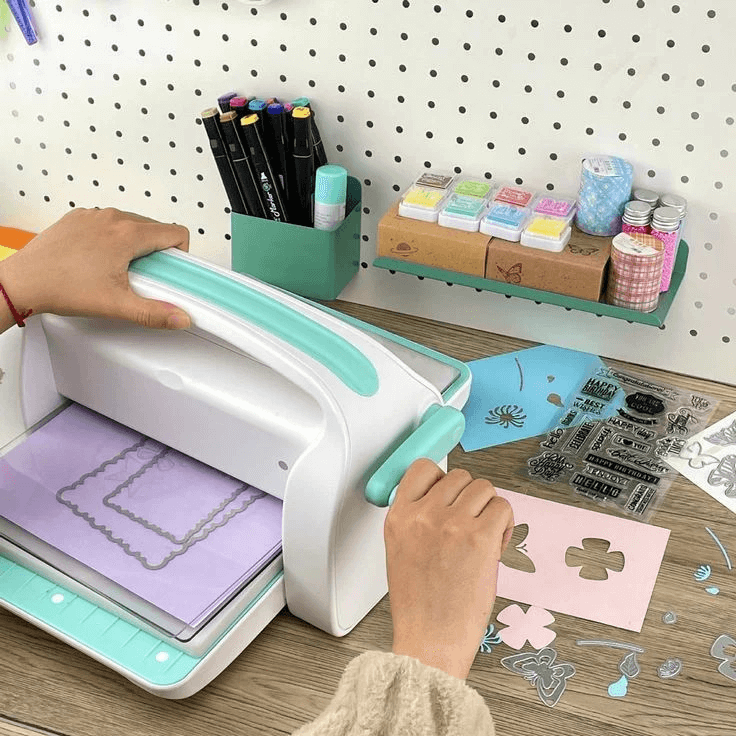
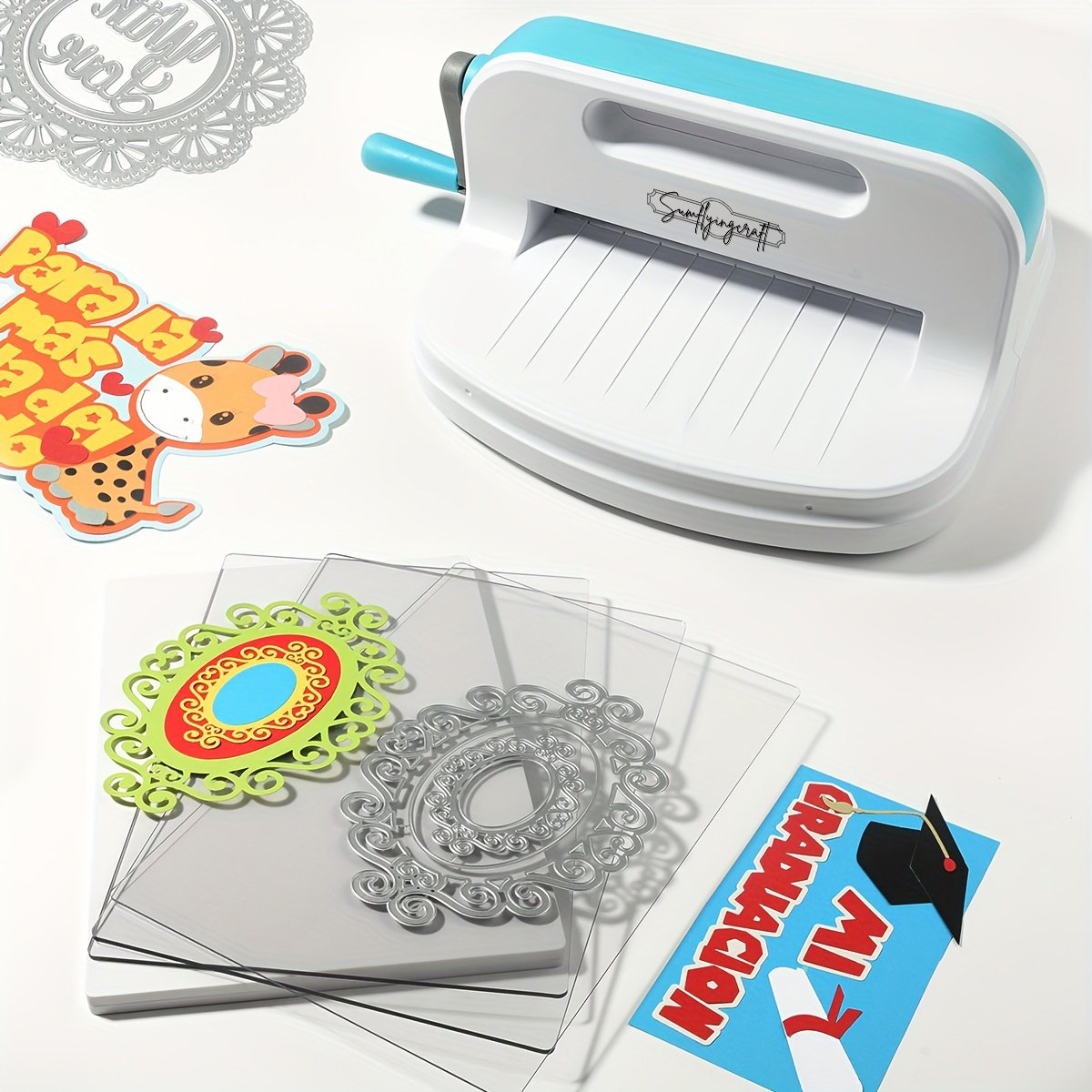
An embossing machine, more accurately called a manual die-cutting and embossing machine, uses two rollers and a crank handle to squeeze paper between two plates. Depending on what you put between those plates, you get one of two results:
- Die cutting: a metal die cuts shapes out of cardstock (words, flowers, frames, and more).
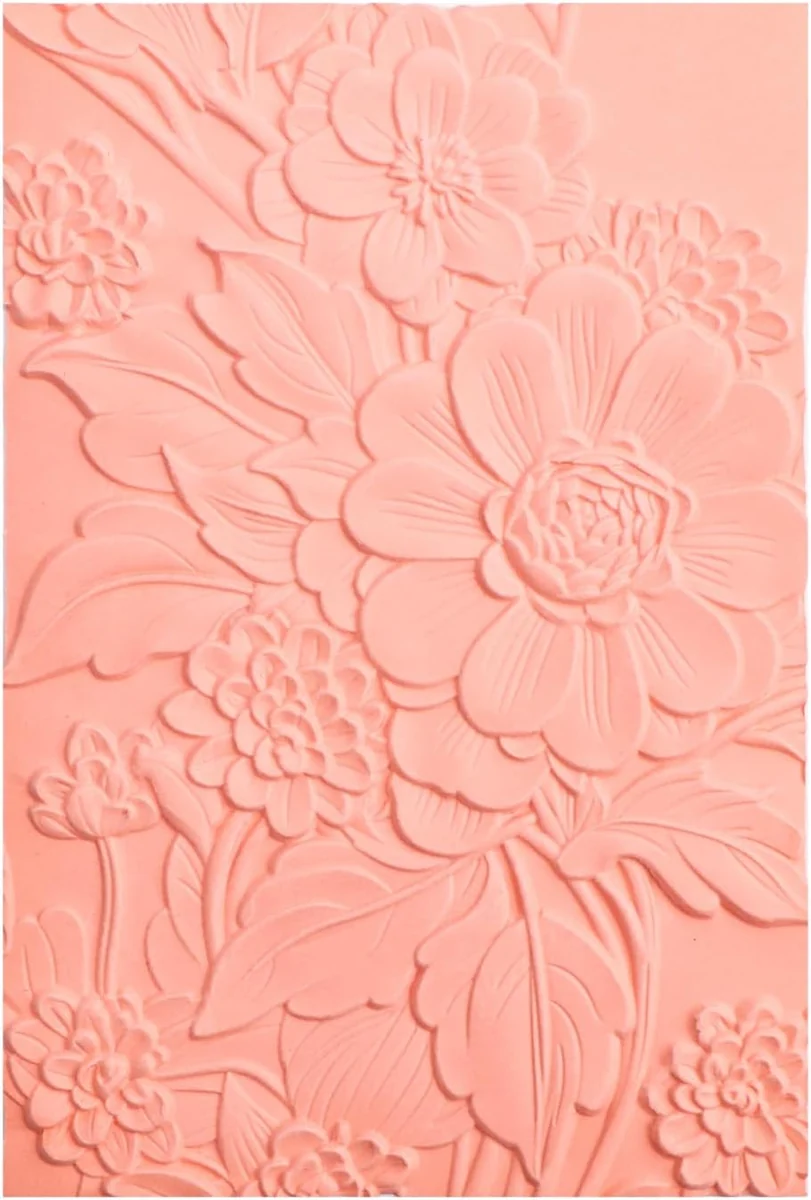
- Embossing: an embossing folder (two textured plastic sheets) presses a raised, dimensional pattern into the paper without cutting it.
There is also a distinction beginners often miss. Embossing raises the design on the front of the card, while debossing pushes it in, so the design sits below the surface of the paper.
Most manual machines do both jobs, cut and emboss. That is why they are often marketed as die cutting machines even when most crafters buy them mainly for embossing.
Embossing Machine vs. Die Cutting Machine: Do You Need Both?
This is the single most common question we hear from beginners, and the answer is reassuring: you do not need two machines.
Here is what we tell everyone who asks. Standard embossing folders press one even pattern across the paper, while 3D folders have varied depths and much finer detail. Both work in the same machine. So if you are investing in a single machine, make sure it can do both, because you will want both before long.
Any standard manual machine, whether it is a Sizzix Big Shot, a Spellbinders Platinum, or a Gemini, handles dies and folders alike. The only real difference between models is the size of paper each one can take. So in this guide, when we say embossing machine, we mean a manual machine that embosses and cuts.
The Sandwich: The First Thing Every Beginner Struggles With
If you read one section of this guide, make it this one. Nearly every frustrated first message we have received is about the sandwich, the precise stack of plates, adapters, and folders that you feed through the rollers. Get it wrong and the folder will not leave a clean impression. Make it too thick and you will hear scary noises.
Here is what we wish someone had told us on day one:
1. The cracking and popping sound is (usually) normal
The first time we ran a thick stack through a Big Shot, the machine popped loudly and the handle jumped. We almost stopped using it, until we learned this: the pressure needed to emboss and cut is genuinely tremendous. Popping sounds, a handle that is hard to crank, and the handle spinning freely once the stack comes out the other side are all normal. These machines and their plates are far harder to break than they sound.
That cracking noise is the acrylic plates being forced flat under immense pressure, and it is expected. What is not normal is having to physically shove the stack through the rollers. If you are forcing it, the stack is too thick.
2. Shims are your best friend (and they are free)
Every brand of folder and die is a slightly different thickness, so there is no single recipe that works for everything. The fix is a shim: a thin layer of cardboard or cardstock that fine-tunes the pressure. Start collecting cereal boxes now, because you will use them constantly.
Shims cost nothing. Cereal boxes, old file folders, and heavyweight junk mail all work. We keep a small box beside our machine holding a mix of plates, embossing folders, and shims cut to different sizes. When a 3D folder will not press deeply enough, add a shim. When a die cuts too hard, remove one.
3. The water-spritz trick prevents cracked paper
Deep 3D embossing can crack your cardstock. The fix we rely on is a light mist of water, but how you apply it matters. Do not spray the paper. Spray the folder, on both sides. That way the mist settles into the deep spots that are most likely to crack, exactly where you need it, and you want to keep the application light.
Two or three light spritzes from a cheap mister bottle, not a spray bottle, relax the paper fibers and give a cleaner, deeper impression without cracking.
4. A flexible cutting mat is quieter and kinder to your machine
Hard acrylic plates warp and crackle over time. Many of us replace the bottom plate with a self-healing or magnetic flexible mat. A flexible mat cuts far more quietly than hard plastic plates, never warps, and its slight give is easier on the roller assembly. It is one of the best small upgrades you can make.
Can You Use Any Brand of Embossing Folder?
Yes. This is the second-biggest worry beginners bring to us, and the answer is almost always yes, as long as the folder physically fits your machine’s opening. We run folders from many brands through our Big Shot and Spellbinders without any trouble. Any brand of embossing folder or die works with any machine. You just have to experiment with your plate stack, because every brand is a slightly different thickness.
So you are never locked into one brand. Your die cutting machine will happily run folders from Sizzix, Spellbinders, Tim Holtz, Darice, Anna Griffin, or any small independent brand. You just adjust the stack.
The Machines We Recommend After a Year of Testing
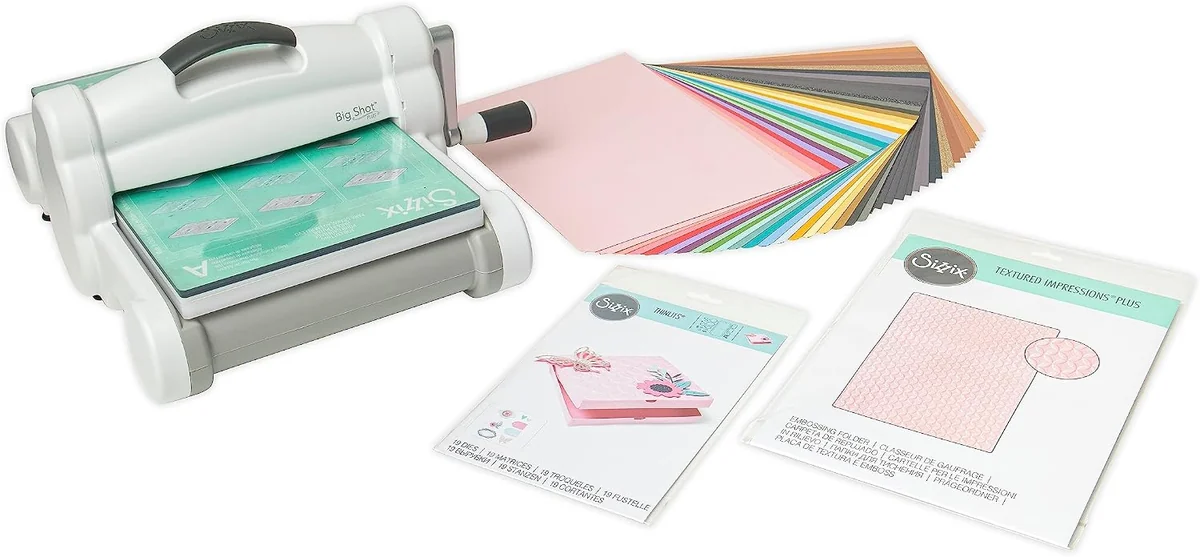
After a year of testing and thousands of cards, a handful of machines stand out. Here is our honest verdict on each.
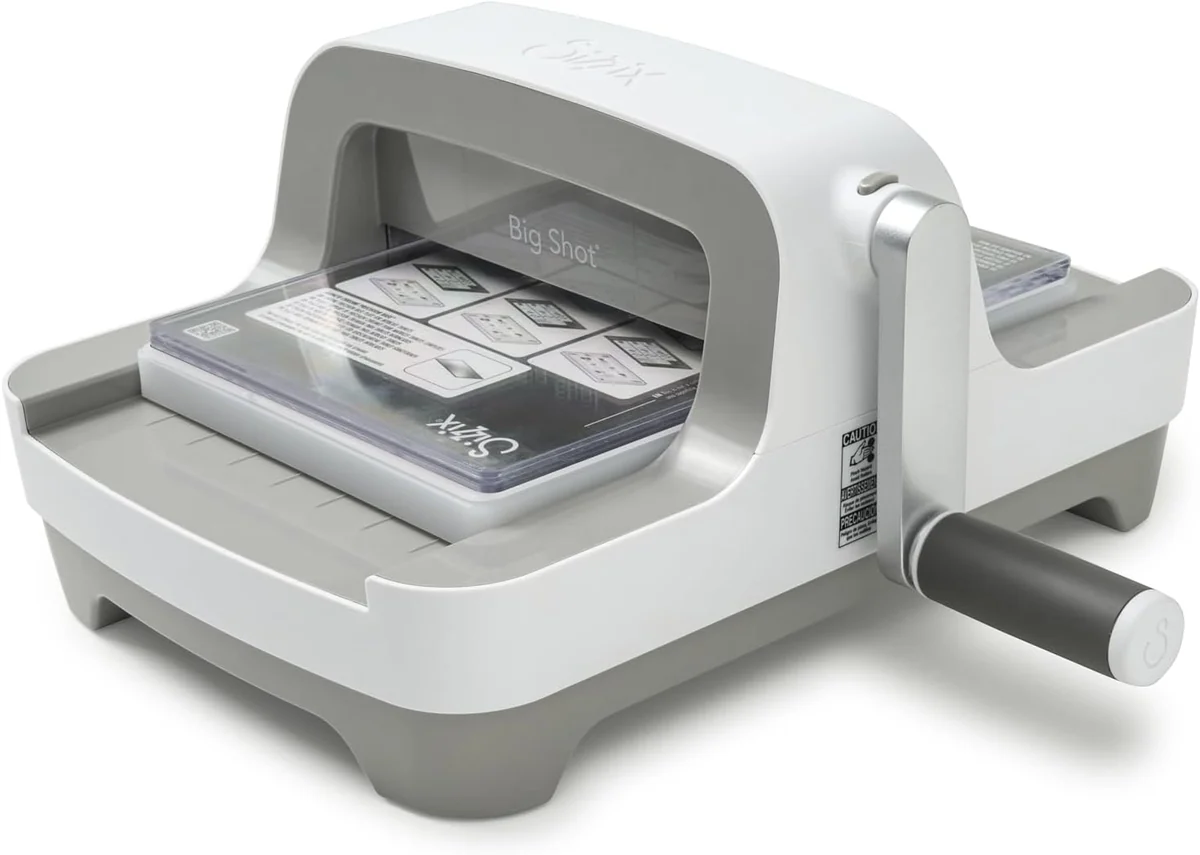
Sizzix Big Shot and Big Shot Plus: The Standard Everyone Copies
The Big Shot is our default recommendation for a good reason. It is the machine that other machines copy. Its parent company, Ellison, has built the die-cutting machines that schools have used for decades, and that pedigree shows in the build quality.
- Best for: Beginners who want one machine that works with any folder or die, no fuss.
- Sizes: Classic (A5-sized opening), Plus (6″×12″), and the space-saving Foldaway version.
- Watch for: Acrylic plates warp over time (they are cheap to replace); feed dies in at an angle to reduce cracking noise.
Spellbinders Platinum 6: The Precision Alternative
The Platinum 6 earns fierce loyalty for its universal platform system, which gives far more flexibility with plate stacks. The platform handles a wide variety of materials, and the whole machine folds down partway, which is a genuine space-saver.
- Best for: Crafters who also want to foil (it works with the Spellbinders Glimmer and BetterPress systems).
- Note: In the EU and UK it can cost roughly double the US price, so it is worth hunting for a regional distributor.
Fiskars Fuse: The Underrated Workhorse
Less famous, but in our view superior to several better-known options. The Fuse folds up for storage, has internal storage built in, and cuts and embosses with remarkable ease. It also takes dies up to 12 inches wide.
- Best for: Heavy users who want durability without ever replacing rollers.
Anna Griffin Empress Mini and Gemini Junior: Compact Options
For smaller spaces, the Empress Mini is a manual machine with a lovely finish, while the Gemini Junior is electric and fast. With the Gemini you do have to stay consistent with flipping the plastic plates, but once you get the rhythm, it flies through a stack of cards.
Cuttlebug: Discontinued but Still Loved
Provo Craft discontinued the Cuttlebug, but secondhand units are still treasured. Plenty of crafters started on one, loved it, and only moved on to a Big Shot when their old machine finally gave up. If you find a cheap one at a thrift store, grab it, just know that replacement plates are getting harder to source.
Common Problems and Fixes We Have Tested
Even great machines have quirks. Here are the fixes that work for us:
| Problem | Fix That Works for Us |
|---|---|
| Paper cracks with 3D folders | Spray the folder (not the paper) lightly with water; use 250+ gsm cardstock; cut paper ¼” smaller than the folder so it has room to expand. |
| Embossing folder hinge snapped | Put a length of strong masking tape across the hinge end, then feed the open end in first at a slight angle. In our experience, masking tape keeps a snapped folder usable for years. |
| Impression too shallow | Add a cereal-box or cardstock shim; test on scrap paper first and note the winning plate stack on the folder itself. |
| Acrylic plates warped | Normal wear. Flip plates each use to even out curling; consider a flexible magnetic mat to stop warping entirely. |
| Folder too small for the panel | Run the paper through twice, lining up the un-embossed edge; or trim the folder edges on a guillotine to emboss longer sheets. |
Six Pro Tips You Will Wish You Knew Sooner
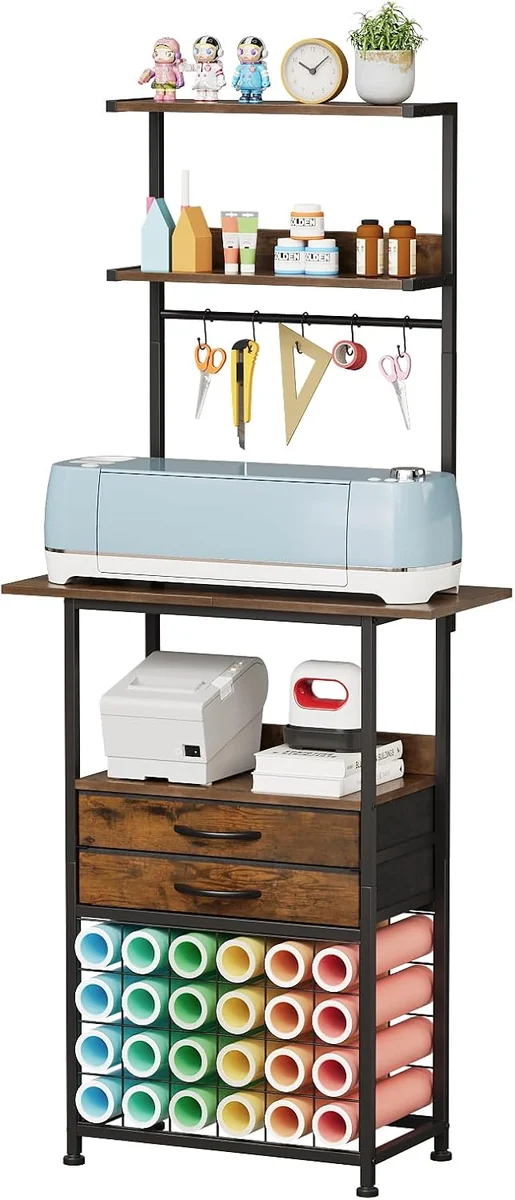
- Emboss with stencils too. You can use stencils to emboss, and it opens up a whole new design language. A rubber mat, a stencil, and a sheet of cardstock run through any machine. We only discovered this by accident, and now we do it constantly.
- Mark your winning plate stacks. Write the exact stack on a test scrap and store it inside the folder. It saves endless trial and error.
- Angle your dies. Feeding a straight-edged rectangle die in corner-first dramatically reduces that alarming crack and extends the machine’s life.
- Do not fear secondhand. Sizzix machines are built to last, so good deals on used machines show up all the time online. Thrift stores routinely have embossing folders for under a dollar.
- Good cardstock matters more than the machine. Higher cotton-content paper resists cracking and foils beautifully. Cheap paper is the most common cause of disappointing results.
- One machine is enough to start. Do not fall into the gear trap. Most beautiful cards need only paper, a few folders, and one reliable machine.
Frequently Asked Questions
Can you emboss without a machine?
Yes, with limitations. You can dry-emboss by hand using a stylus and a stencil on a soft surface, and spritzing the paper first gives a deeper impression. In a pinch, a small folder can even go through a pasta machine, which sounds odd but genuinely works. For consistent results and any die cutting, though, a manual machine is worth the money.
Can a Cricut emboss?
A Cricut can deboss, pushing the design into the paper, but it does not raise the design the way a manual machine does. The debossing tip is also fairly wide, so fine detail is limited. For real embossing, a Big Shot or a Platinum is the simpler path.
Do I need a special plate for 3D embossing folders?
Usually not. Most 3D folders run through a standard machine with the regular plate stack, plus maybe a shim. Paper shims have a bit of give, which is easier on the roller mechanism, so you rarely need any extra mat.
Why is my machine so loud?
The cracking and popping is the sound of pressure doing its job. It is normal, and the machine is built to handle it. If you want it quieter, a flexible mat is the best upgrade you can make.
Which machine should a complete beginner buy?
The Sizzix Big Shot (or the Big Shot Plus if you work with 12″ paper) is the safest first buy: universal folder compatibility, abundant tutorials, and replacement parts everywhere. Step up to the Spellbinders Platinum 6 if you plan to add foiling later.
Final Thoughts: Start Simple, Emboss Often
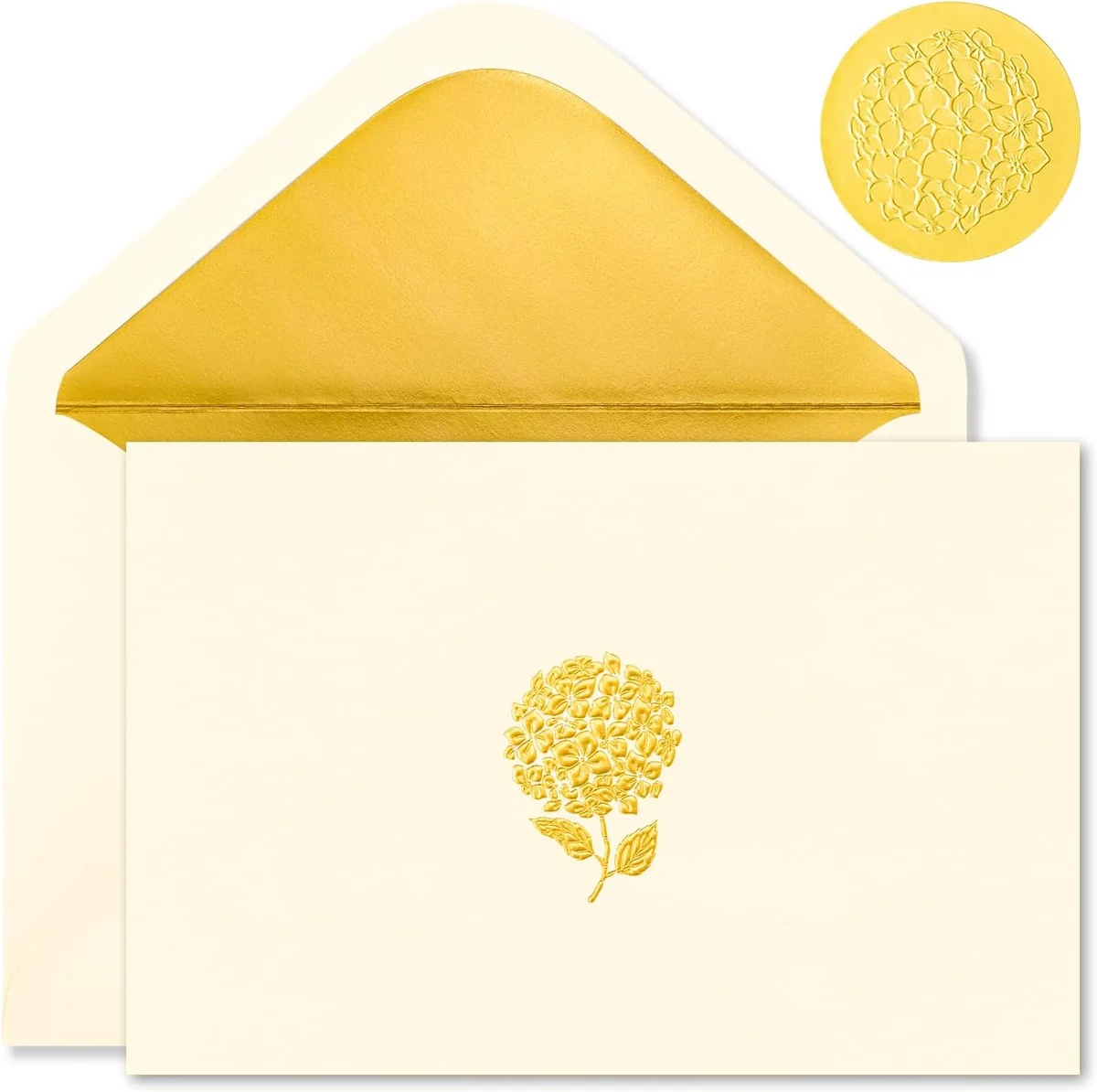
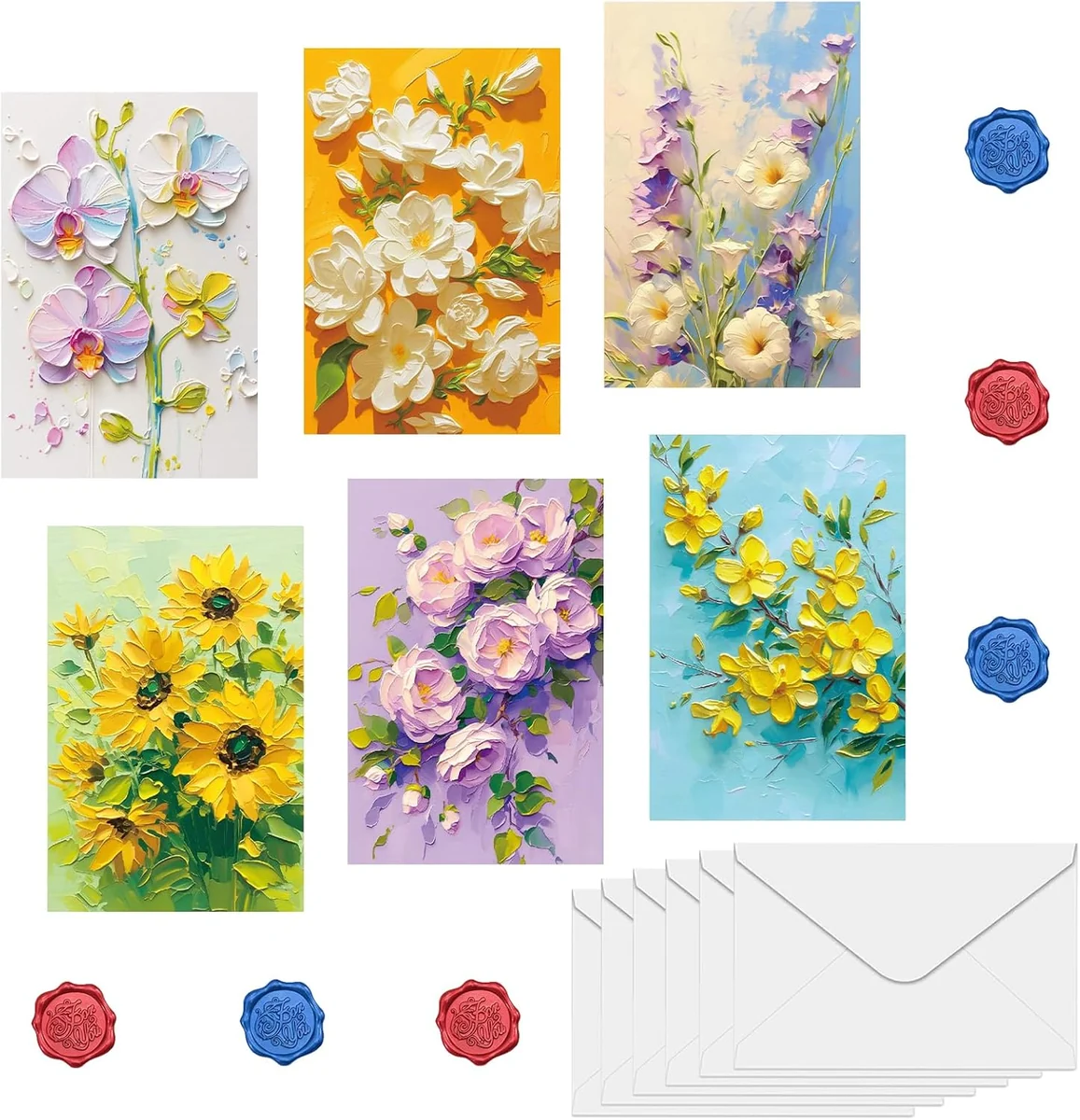
The best embossing machine is not the most expensive one. It is the machine that earns a permanent spot on your desk. For most of us that means a humble Big Shot or Platinum 6, a shoebox of shims, a mister bottle, and a growing collection of folders we actually use.
Ready to start? Browse our full range of die cutting machines and embossing folders. Every one of them handles the techniques above, and all are ready to turn a flat sheet of cardstock into something with real dimension.
This guide comes from a year of hands-on cardmaking, with every tip tested at our own craft table. The best way to learn is to emboss, fail gently, and adjust. Just never use brute force.
 New Arrivals
 Best Sellers
 All Product
 Latest deals