
No products in the cart.


Journal
Embossed Stickers vs. Embossers: Which One Should You Actually Buy?
If you have ever tried to put a raised, professional-looking mark on paper, you have probably stood at the same crossroads we did a couple of years ago: buy a sheet of embossed stickers and be done in ten seconds, or invest in a real embosser and press the design into the paper yourself. Both options look similar in product photos. Both promise that crisp, dimensional finish. The difference shows up weeks later, when you are either peeling sticker number 400 or pressing your two-thousandth impression with the same metal die.
This guide comes from our own workbench, not from a marketing sheet. We press custom designs for customers every day, we have worn out a fair share of label rolls, and we have made every mistake in the book so you can skip them. Here is the honest breakdown of embossed stickers vs embossers, including the math most guides skip.
What You Are Actually Comparing
Before choosing, it helps to be precise about what each product is, because the two overlap less than you might think.
Embossed Stickers: The Peel and Stick Route
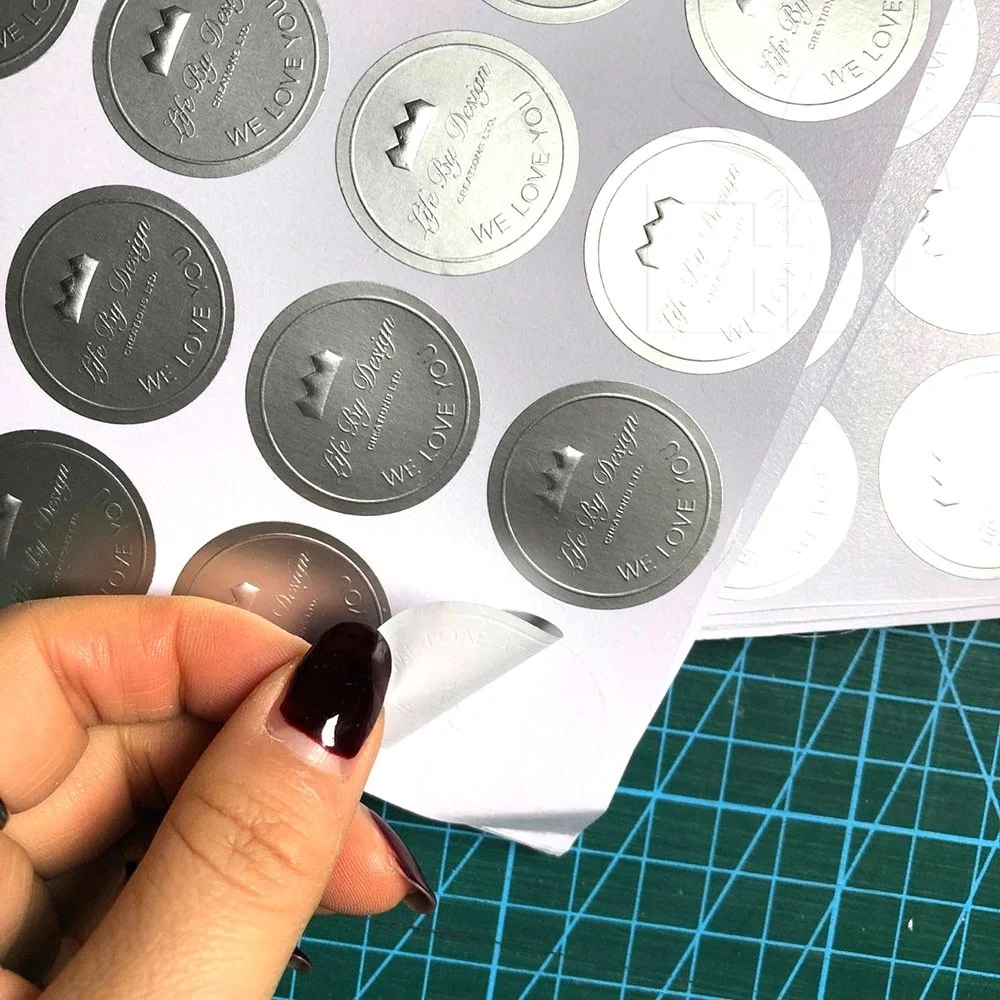
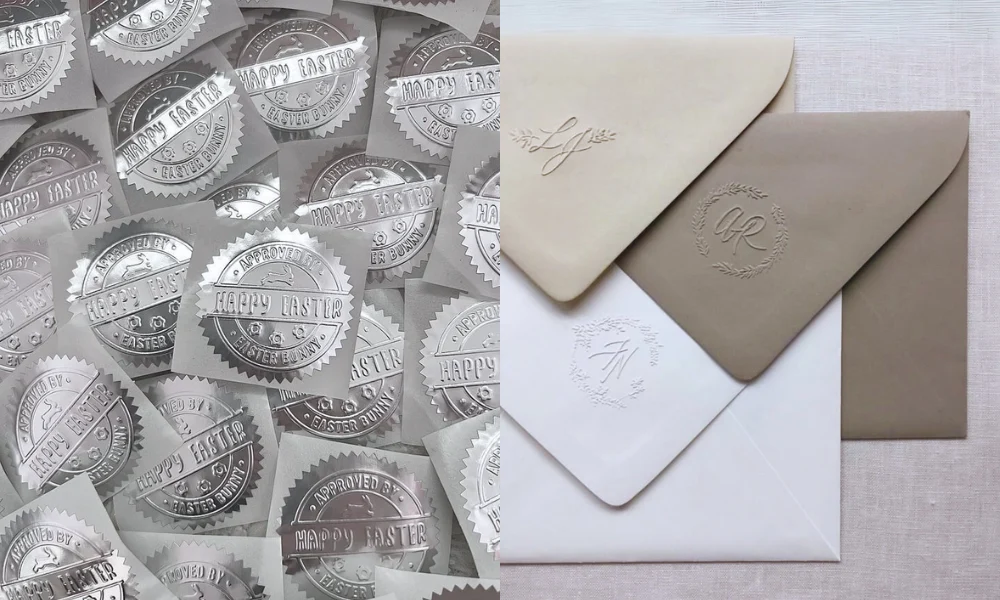
An embossed sticker is a pre-made label with a raised pattern already pressed into it, backed with adhesive. You peel it off the roll and stick it wherever you need it: envelope flaps, gift boxes, product packaging, certificates. Most come in gold or silver foil with a scalloped edge, which is why they photograph so well.
The appeal is speed. There is no learning curve, no pressure to dial in, no alignment to practice. If you need 300 wedding invitations sealed by Friday, stickers are the only realistic option. They also stick to surfaces an embosser cannot touch: glassine bags, plastic mailers, metal tins, ribbon.
The trade-off is that the design is generic. You get a blank circle or a standard motif, not your monogram. And on anything that gets handled a lot, edges can lift over time.
Embossers: The Press It Yourself Route
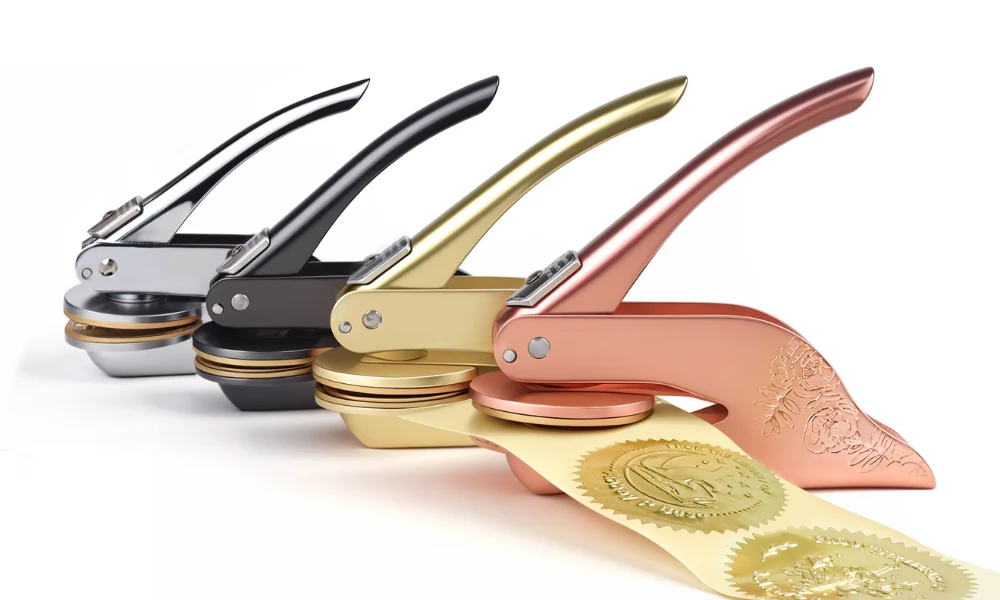
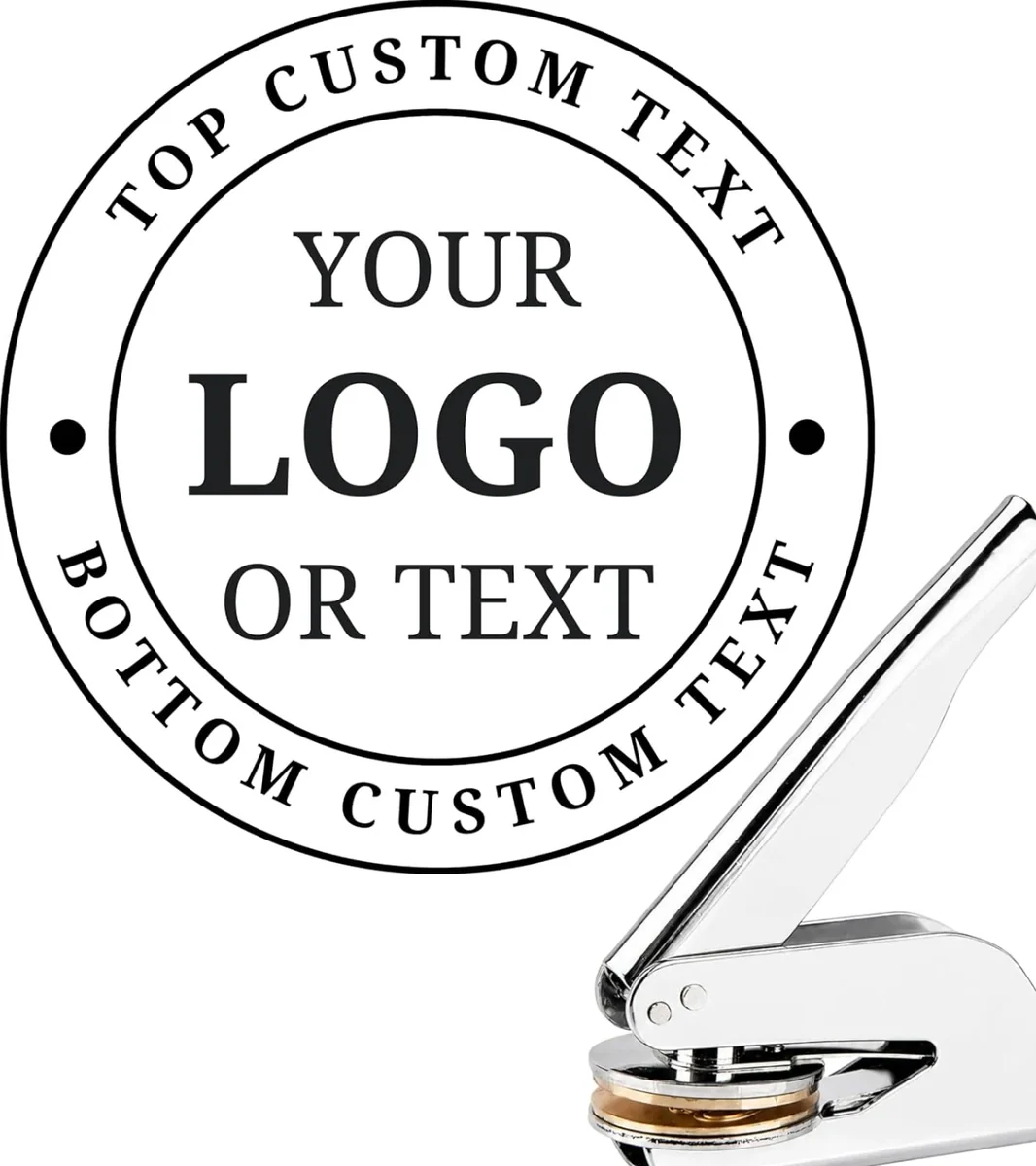
An embosser is a hand-held press with two interlocking metal dies. Squeeze the handle and the dies press your custom design directly into the paper, leaving a raised, tactile mark that is part of the sheet itself. No ink, no adhesive, nothing to peel or catch on.
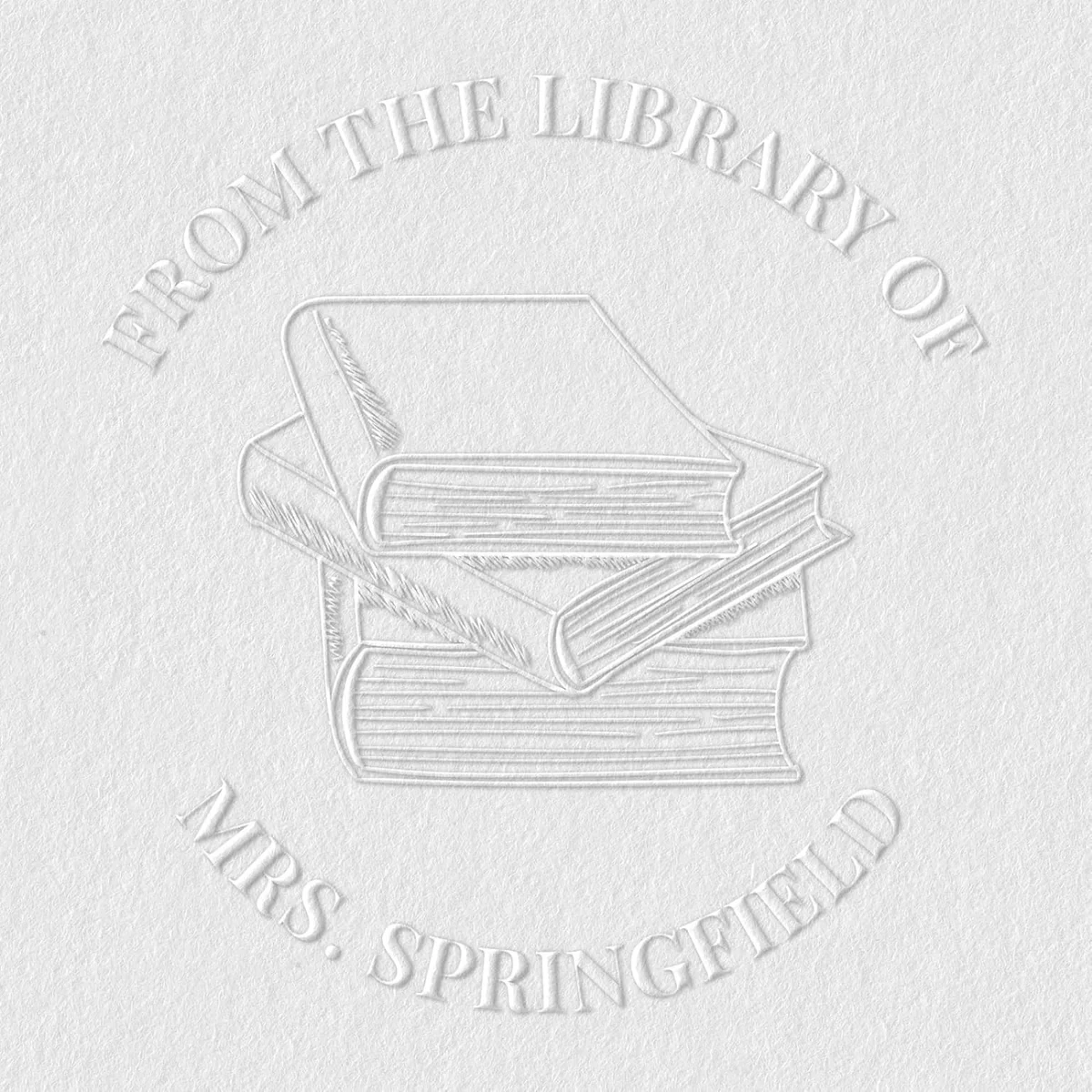
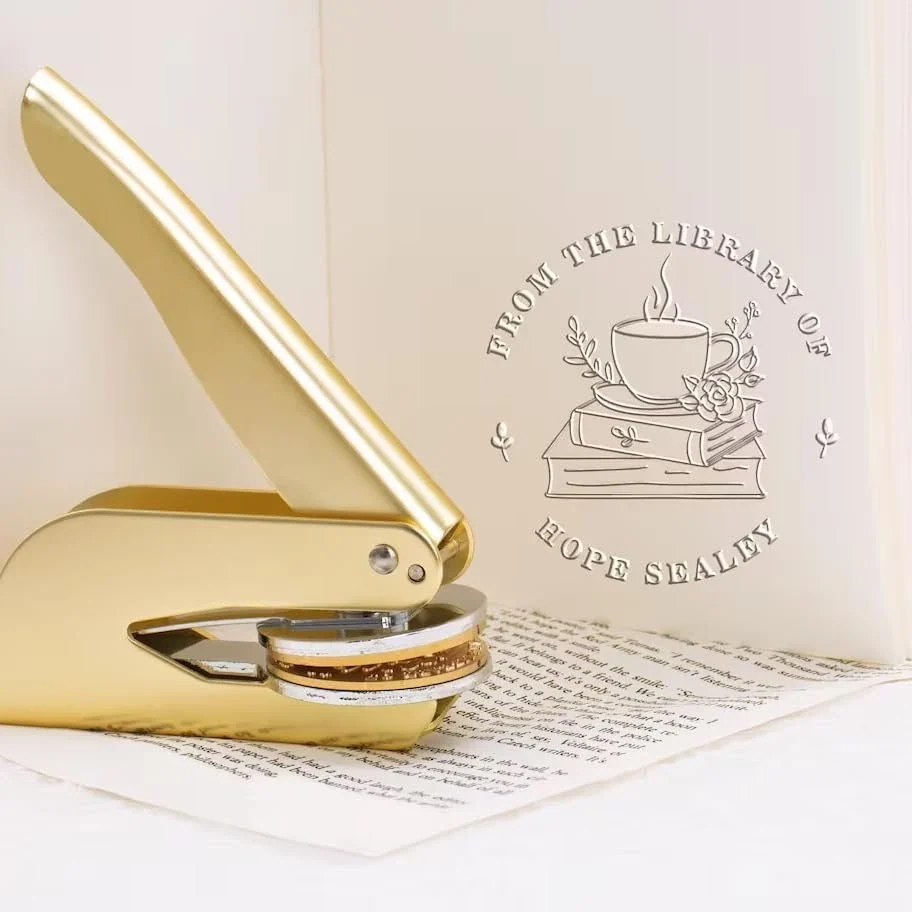
Because the die is custom-made, the design is entirely yours: a monogram, a logo, a return address, a from the library of line with your name. A good custom book embosser becomes a permanent tool. We have customers who have pressed the same die for years, and the impression never fades the way a printed logo does.
The trade-off is the opposite of stickers: there is a short learning curve, and embossers only work on paper products, roughly the 60 to 120 gsm range. Too thick and the dies struggle; too thin and the paper wrinkles.
Side by Side: The Honest Comparison
| Feature | Embossed Stickers | Custom Embosser |
|---|---|---|
| Learning curve | None, peel and stick | 5 to 10 practice presses |
| Design | Generic or pre-made motifs | Fully custom: name, logo, monogram |
| Cost per piece | Drops only with volume, never free | One purchase, then near zero |
| Surfaces | Paper, plastic, metal, glass, ribbon | Paper and light cardstock only |
| Durability | Adhesive can curl or lift | Permanent, part of the sheet |
| Best volume | 100 to 1,000+ pieces, one-off events | Unlimited over years |
| Feel | Decorative, layered | Authentic, pressed-in luxury |
Do the Math Before You Decide
Here is the comparison nobody puts in the product description: cost per impression.
A roll of 300 blank gold seals runs about $10 to $15. That is roughly 4 cents per seal, and you still have a generic design. Fine for envelope closures, useless for branding.
A custom embosser costs about the same as a nice dinner out, around $48 for something like our Custom Book Embosser, and then every impression is free, forever. Press it 500 times in a year and your cost per mark is under 10 cents and falling. Press it for five years, as many of our library-loving customers do, and it rounds to zero.
The break-even point is surprisingly low. If you expect to make more than about 150 marks in your lifetime, the embosser wins on cost. Below that, stickers win because you are not paying for a die you will use twice.
Six Buyers, Six Answers
We talk to customers daily, and the right answer almost always maps to one of these situations.
1. The Book Lover
An embosser, every time. Book pages are thin paper, exactly where a press shines, and a pressed mark never bleeds through or peels. A design like our Custom Koi Fish From the Library Of Book Embosser turns lending a novel into a small ceremony. Stickers cannot replicate that pressed-into-the-page feel.
2. The Wedding or Event Planner
Stickers for bulk sealing, an embosser for the pieces that matter most. Sealing 200 envelope flaps with gold seals takes an afternoon and costs under $20. Pressing each one by hand takes longer, so most planners reserve the embosser for invitation cards and thank-you notes, then use seals on outer envelopes.
3. The Small Business Owner
This is where the hybrid approach earns its keep, which we cover below. If your packaging is paper-based, a custom embosser with your logo makes kraft mailers look like boutique packaging for pennies. If you ship in poly mailers, embossing will not work, so branded foil stickers are the practical choice.
4. The Office or Corporate Buyer
Certificates, awards, official letters: an embosser is the standard for a reason. The mark cannot be photocopied convincingly, it reads as authority, and one die covers every document you will ever issue. Pair it with gold seal stickers when you want the pressed look on documents too thick to press, more on that trick in a moment.
5. The Card Maker
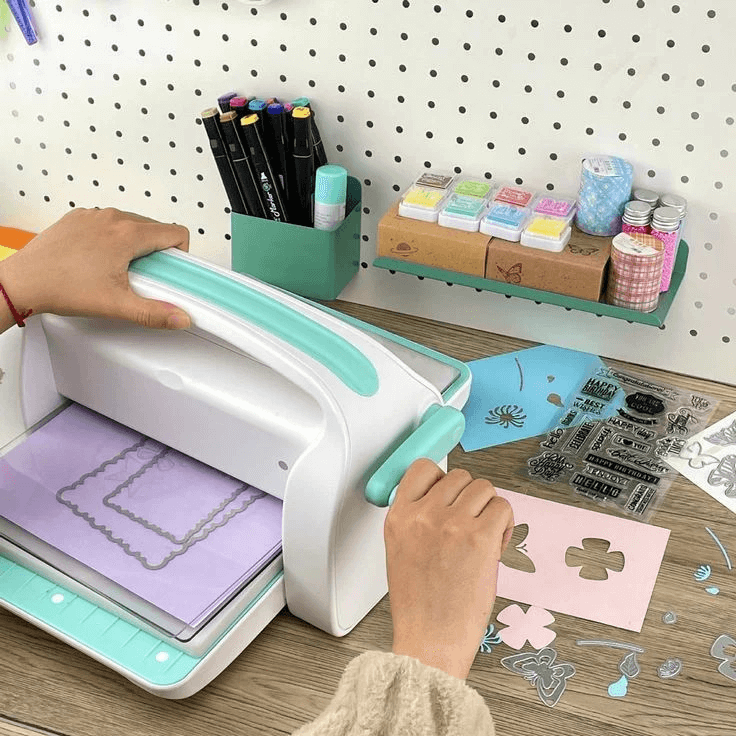
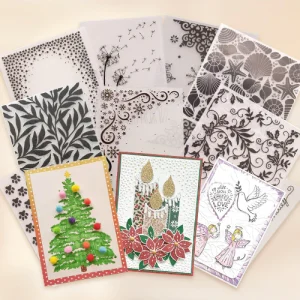
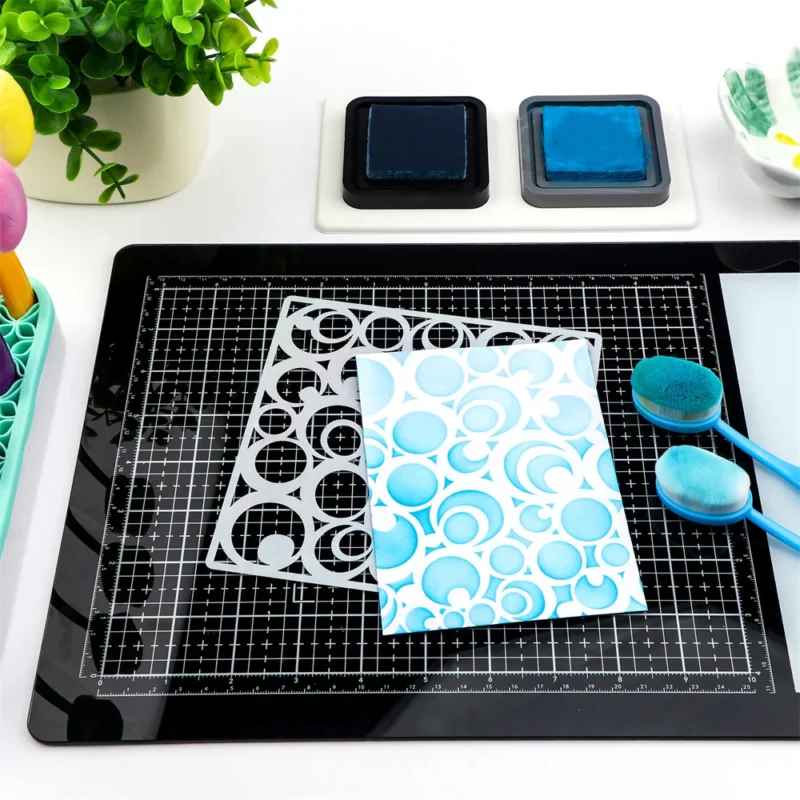
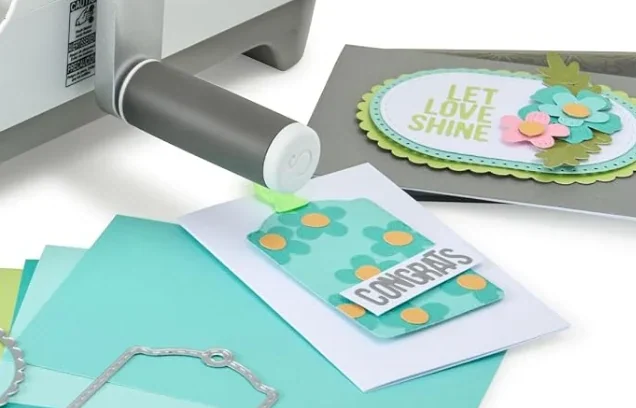
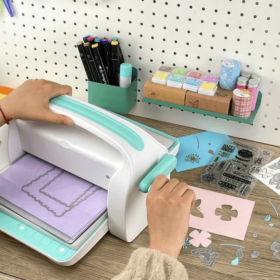
If your goal is texture on cards, you are actually shopping in a different category. An embosser presses a small seal design, not an A2 background pattern. For full-card texture you want embossing folders run through a die cutting machine, like the folder and machine setup shown below.
6. The Gift Giver
An embosser is one of those gifts people do not think to buy themselves. Teachers, librarians, new homeowners, keen readers: press their name into a die and you have a present that gets used weekly for a decade.
The Hybrid Trick Most Guides Miss
Here is what we tell every customer who cannot decide: you do not have to.
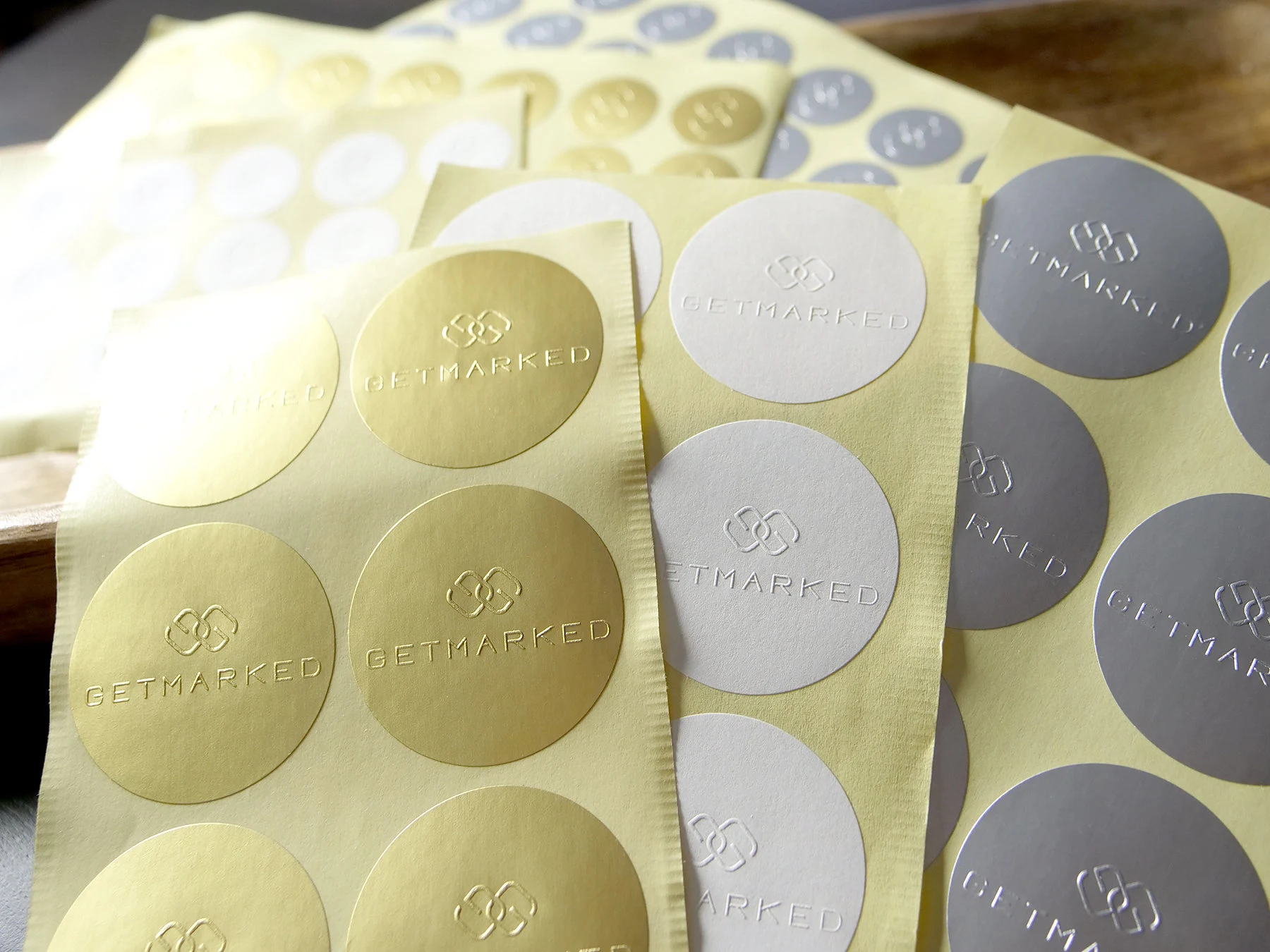
Embossers can press designs onto label stock, not just plain paper. Buy a roll of blank self-adhesive seals, press your custom die onto each one, and you now have custom embossed stickers made in-house, in whatever quantity you need, whenever you need them. That is why we stock blank embosser labels, self-adhesive for raised seals: press first, peel, stick to poly mailers, jars, tins, anything an embosser cannot touch directly.
The cost math still favors this setup over pre-made stickers, because the die is a one-time purchase. Our kraft label sheets (100 pcs kraft label stickers for embosser) work the same way for a warmer, handmade look on packaging and tags.
About Bookplate Stickers: A Fair Alternative
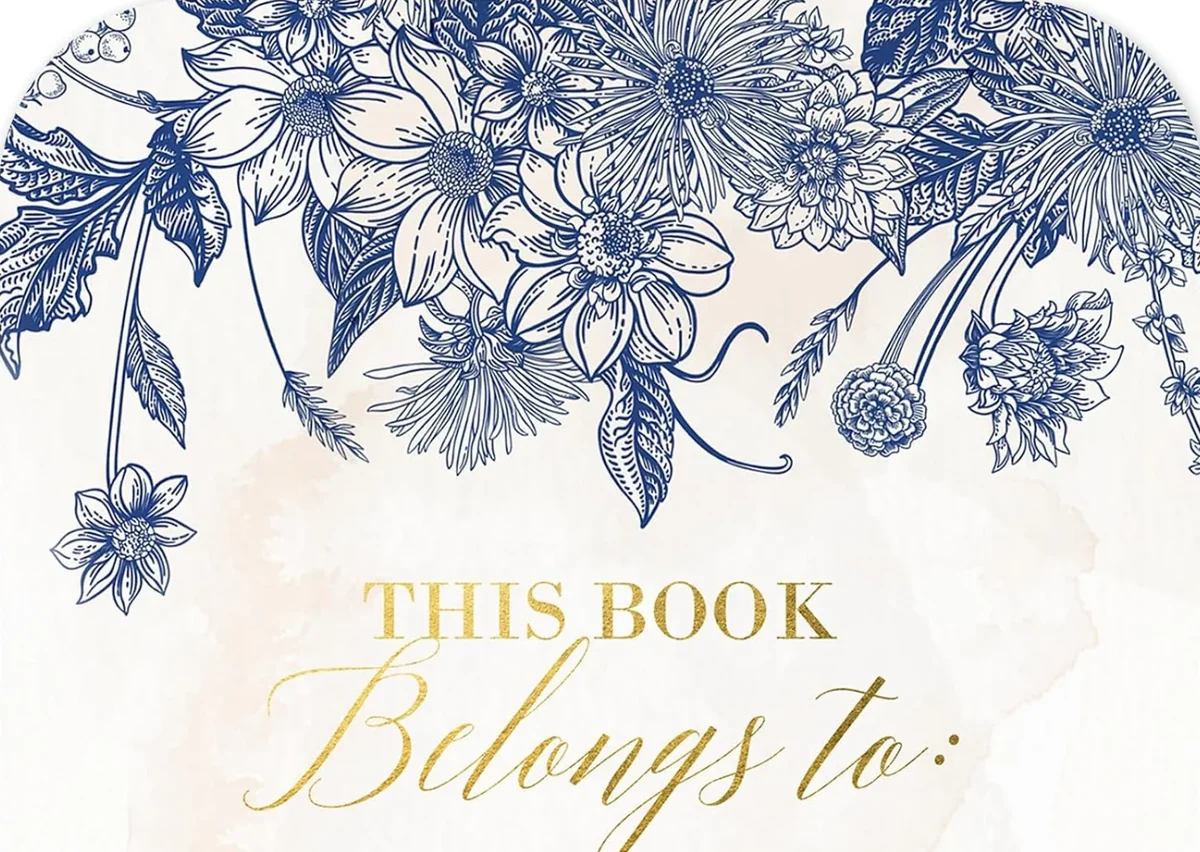
If you love the pressed look but genuinely do not want a permanent mark in your books, pre-printed bookplate stickers are a reasonable middle path. Designs like the vintage this book belongs to labels below cost a few cents each, look charming, and peel off if you change your mind. We recommend them for borrowed library books, textbooks you plan to resell, and anything you did not pay collector prices for.
Getting a Clean Impression Every Time
The main reason people abandon an embosser and go back to stickers is a wobbly first week. These five fixes cover almost every bad impression we have seen.
| Problem | Fix |
|---|---|
| Impression too faint | Press on a firm, flat surface. Soft desk pads and tablecloths absorb pressure. |
| Design off center | Crease the page lightly first and line the fold to the die edge, or mark a guide with a pencil. |
| Paper wrinkles or tears | Your stock is too thin. Stay above 60 gsm for books, above 100 gsm for cardstock. |
| Handle will not squeeze fully | Paper too thick or double stacked. One sheet at a time, or use the embosser-on-labels trick. |
| Impression fades over years | It should not. If it does, the die plates were misaligned on arrival; ask for a replacement. |
One more habit worth building: practice on ten junk envelopes before the real thing. Every press teaches your hand the right squeeze, and by impression number ten you will be faster than any sticker peeler.
A Quick Word on Heat Embossing
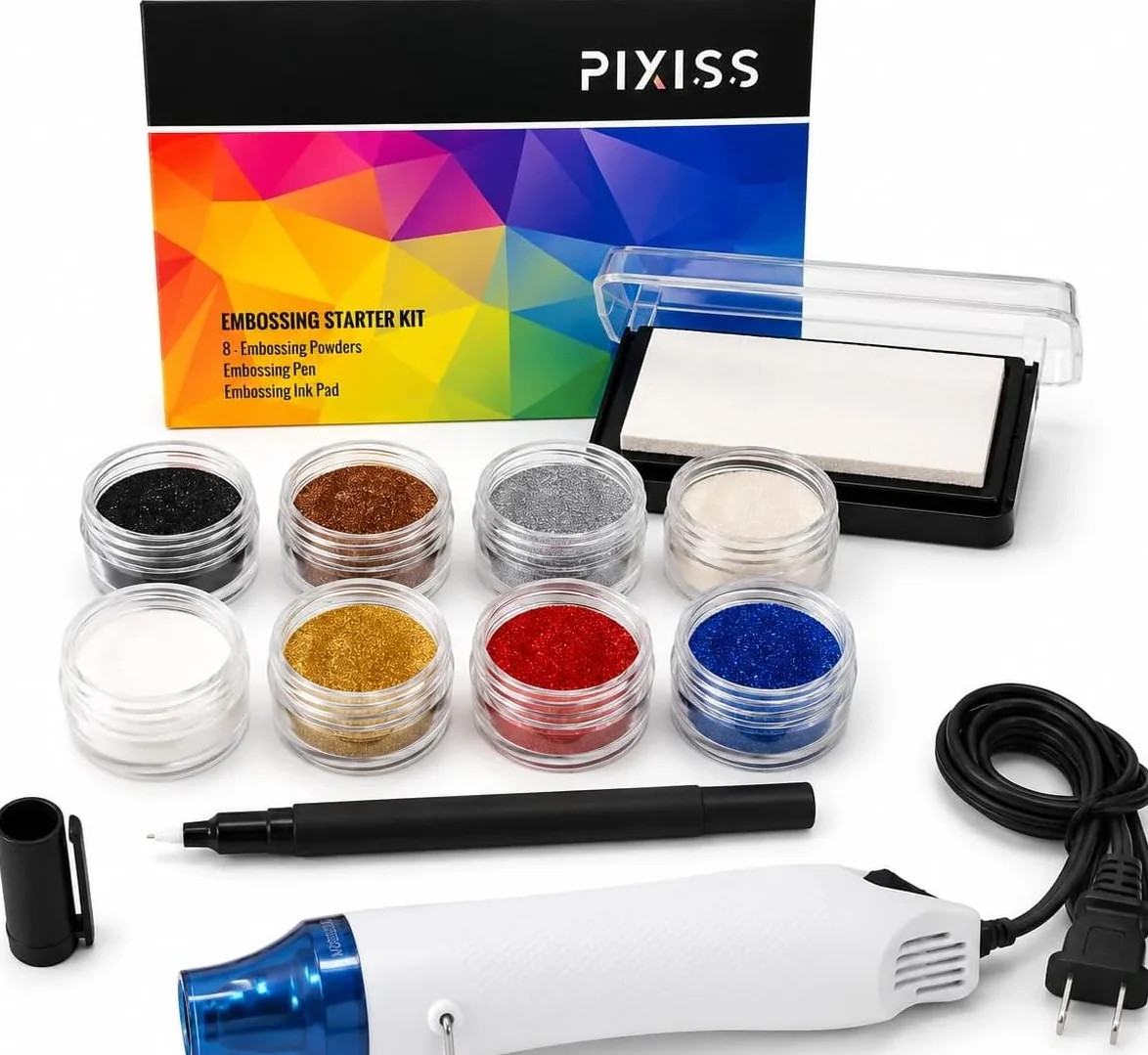
Searches throw a third option into the mix, so let us clear it up. Heat embossing is a different technique entirely: you stamp wet ink, sprinkle embossing powder, and melt it with a heat tool. It gives a glossy raised finish and works on any paper weight, but it needs consumables and a steady hand. It is a card making technique, not a personalization tool. For marking belongings, certificates, and stationery, stickers and embossers remain the practical comparison.
FAQ
Can I use an embosser on glossy or coated paper?
Poorly. Coated stock resists compression, so impressions come out shallow and the coating can crack. Uncoated papers, book pages, and standard cardstock take the cleanest marks.
How long does a custom embosser die last?
Indefinitely for hobby use. The dies are machined from solid brass and steel, rated for thousands of impressions. We have never had a die wear out in normal use, only misaligned ones, which are covered by replacement.
Are embossed stickers waterproof?
The foil face resists moisture, but the adhesive and backing paper do not survive soaking. For anything that will get wet, print or emboss on waterproof synthetic labels instead.
What paper weight works best with a hand embosser?
Between 60 and 120 gsm. That covers novel pages (around 70 to 90 gsm), stationery, and most certificates. Light cardstock up to about 160 gsm works with firm pressure, but test first.
Can I emboss stickers I already own?
Yes, if they are blank. Press your die onto blank adhesive seals and you have custom embossed stickers. Pre-printed or textured sticker faces will show the die only faintly, so stick to smooth blank stock.
So, Which One Should You Buy?
If you mark paper occasionally and in bulk, buy stickers. If you mark paper personally, repeatedly, and want the design to be yours, buy the embosser. And if you are still torn, do what most of our customers end up doing: start with the custom embosser that matches your name or logo, add a roll of blank seals, and cover both jobs with one small purchase.
We have pressed thousands of impressions at our own workbench, and the embosser is the tool we would grab first in a fire. Stickers have their place, but nothing beats lifting the handle and seeing your own design pressed into the page.
Related reading: How to Choose Cardstock for Die Cutting | Best Dies a Beginner Should Buy First
 New Arrivals
 Best Sellers
 All Product
 Latest deals