
No products in the cart.
Journal
Best Custom Embossers in 2026: What We Learned Testing Personalized Embossing Stamps
When we first started carrying custom embossers in our shop, we did it for a simple reason. Customers kept asking for a way to put their own name, monogram, or logo on the things they made, without reaching for ink. A year of testing models at our own packing table later, we have a pretty clear picture of what works, what disappoints, and which details actually matter when you order one. We pressed hundreds of envelopes, card blanks, and offcuts of leather to learn where each type shines and where it falls flat. This guide is the one we wish we had on day one.
What a Custom Embosser Actually Does
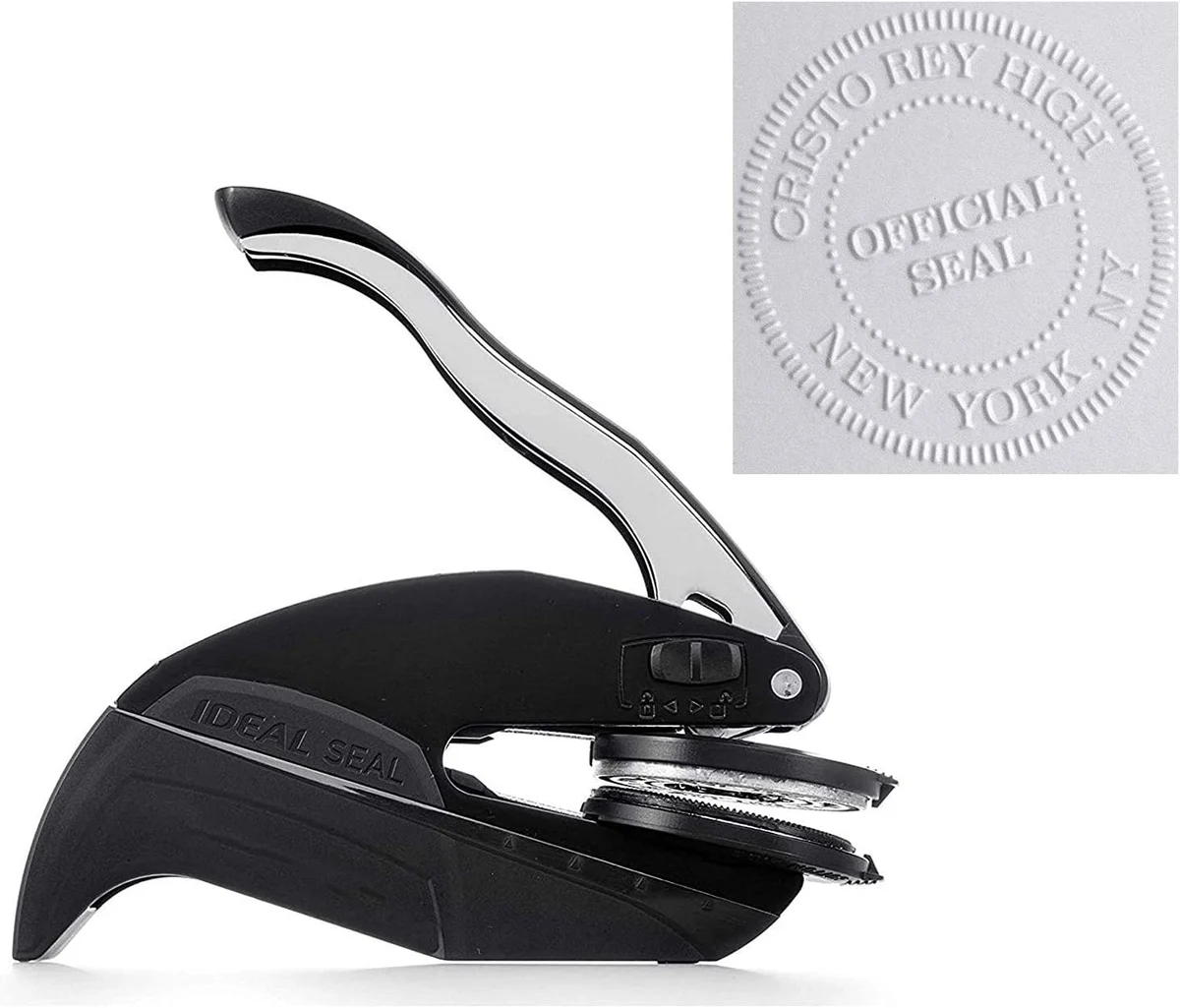
A custom embosser presses your own design into paper or leather and leaves a raised mark with no ink at all. The die carries your monogram, name, or logo, and when you squeeze the handle the design is pushed up from underneath, creating a shadow and a texture you can feel with your fingertip. That raised, ink-free look is the whole point. It reads as careful and personal in a way a printed label never does.
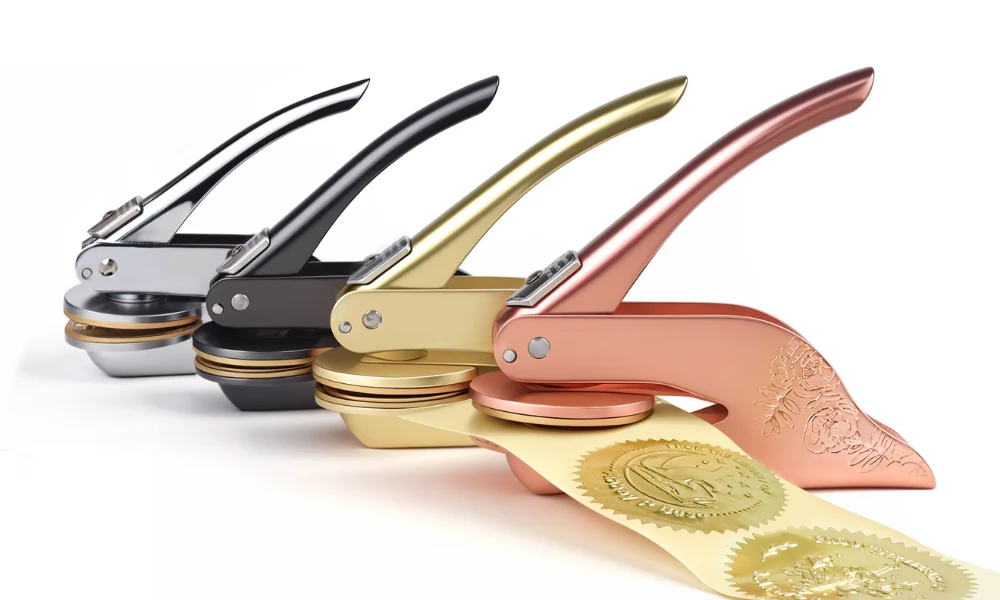
We call this a blind emboss when there is no color involved. You can also find units that add a soft ink pad for a tinted impression, but the classic desk embosser stays clean and dry. For wedding stationery, thank-you notes, and handmade cards, the dry raised mark is usually exactly what people are after.
The Types You Will Choose Between
Before you order, it helps to know the shapes these tools come in, because the type decides where and how you will use it.
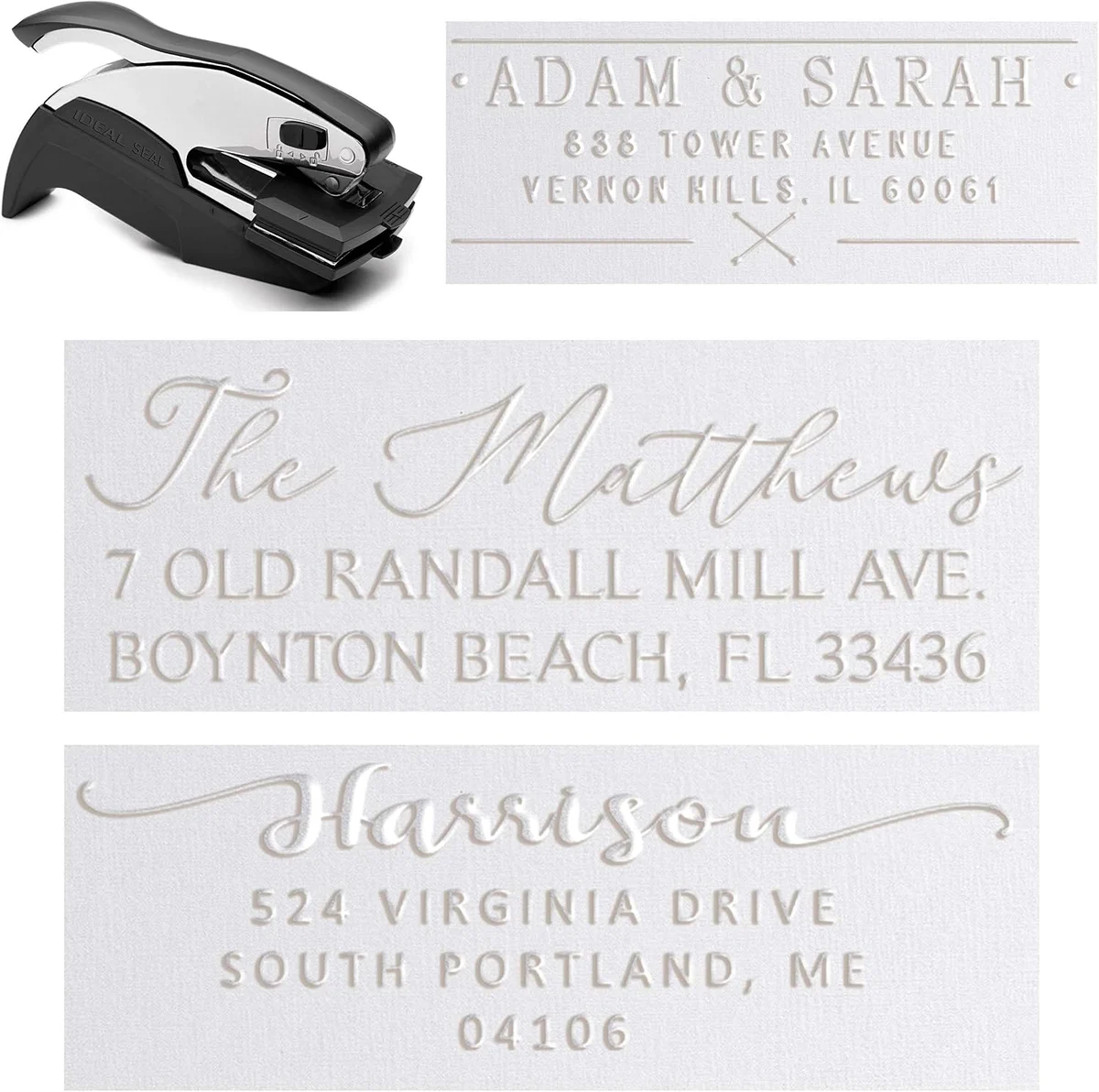
- Desktop lever embosser: the classic model that sits on a table. A long handle gives you leverage for a deep, even impression. This is the one we reach for most often with envelopes, cards, and letterheads.
- Handheld and pocket embossers: smaller, lighter, and made to travel. Perfect for planners, journals, and craft fairs where you want your mark on the spot.
- Notary and seal embossers: built for legal documents. Many states set rules for size and layout, so check what your location requires before you order.
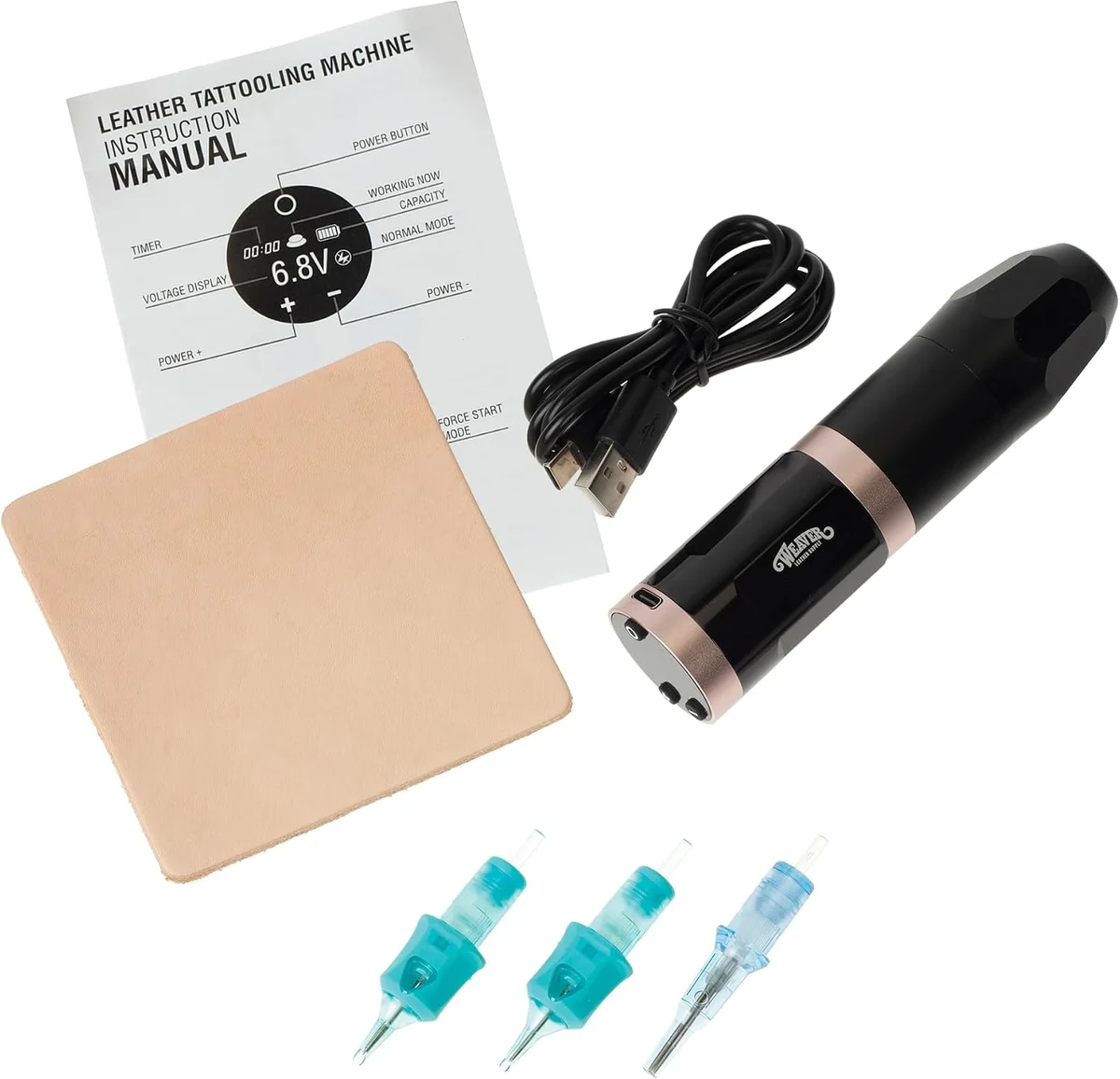
- Electric embossers: you press a button and the machine applies steady pressure. This is the right call for volume work and for thicker materials like leather.
- Interchangeable-plate embossers: the body stays the same and you swap the brass die to change the design. Handy if your logo and your return address both need embossing.
| Type | Best for | Pressure source |
|---|---|---|
| Desktop lever | Envelopes, cards, letterheads | Hand lever |
| Planners, journals, on the go | Hand press | |
| Notary seal | Legal documents | Hand lever |
| Electric | Volume, leather | Motor |
| Interchangeable | Changing designs | Hand or electric |
Where a Custom Embosser Earns Its Keep
The reason these tools stick around on a crafter’s desk is that they fit into so many projects. Here are the uses we come back to the most.
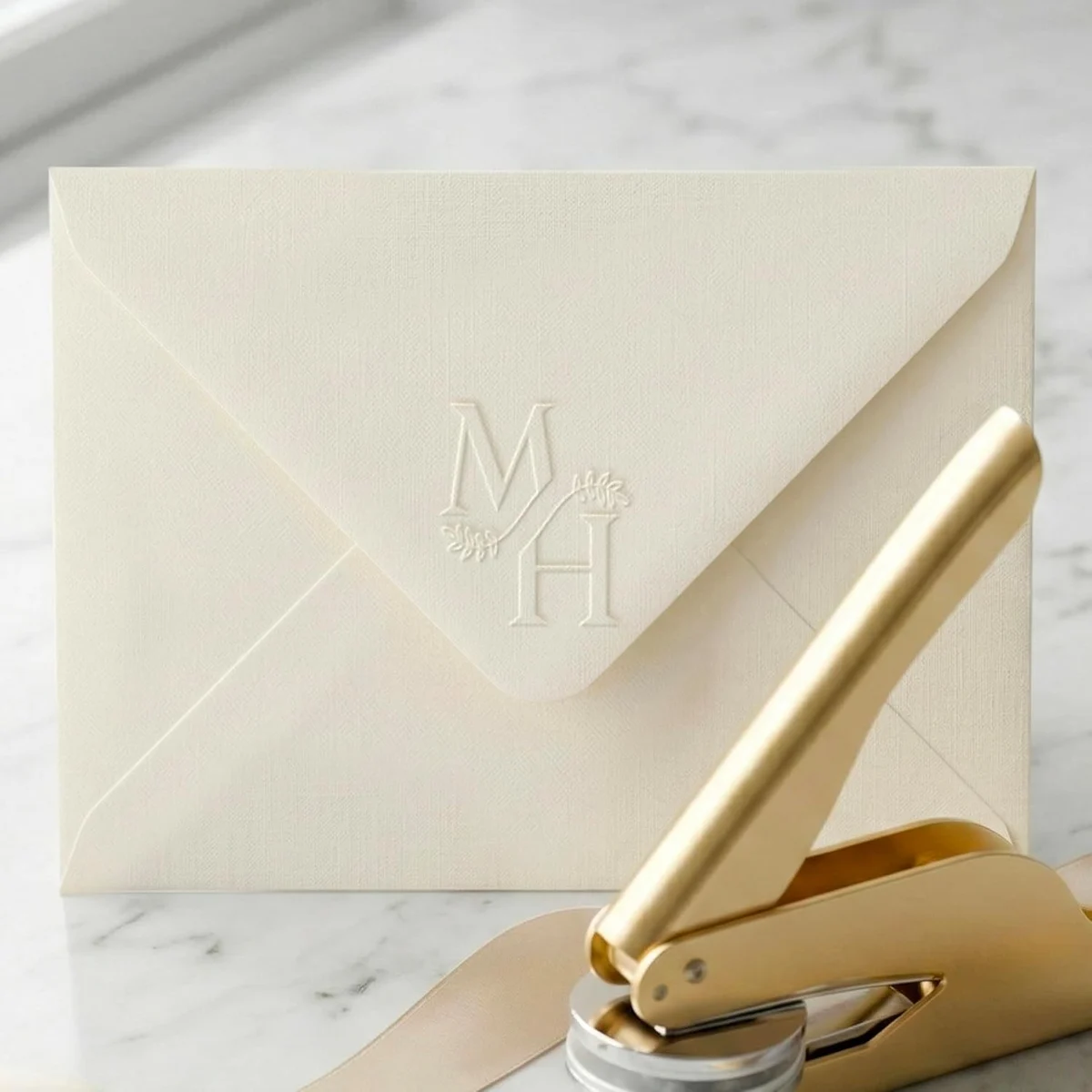
- Wedding invitations and return-address envelopes. A raised monogram on the flap or the back flap turns a plain envelope into something that feels handled with care. This is the single most common reason our customers order one.
- Everyday stationery and letterheads. A personal note on embossed paper just lands differently.
- Leather goods. Wallets, notebook covers, and key fobs take a deep impression that wears in beautifully.
- Business cards and branded thank-you notes. A small logo emboss on a card is a quiet signal of quality.
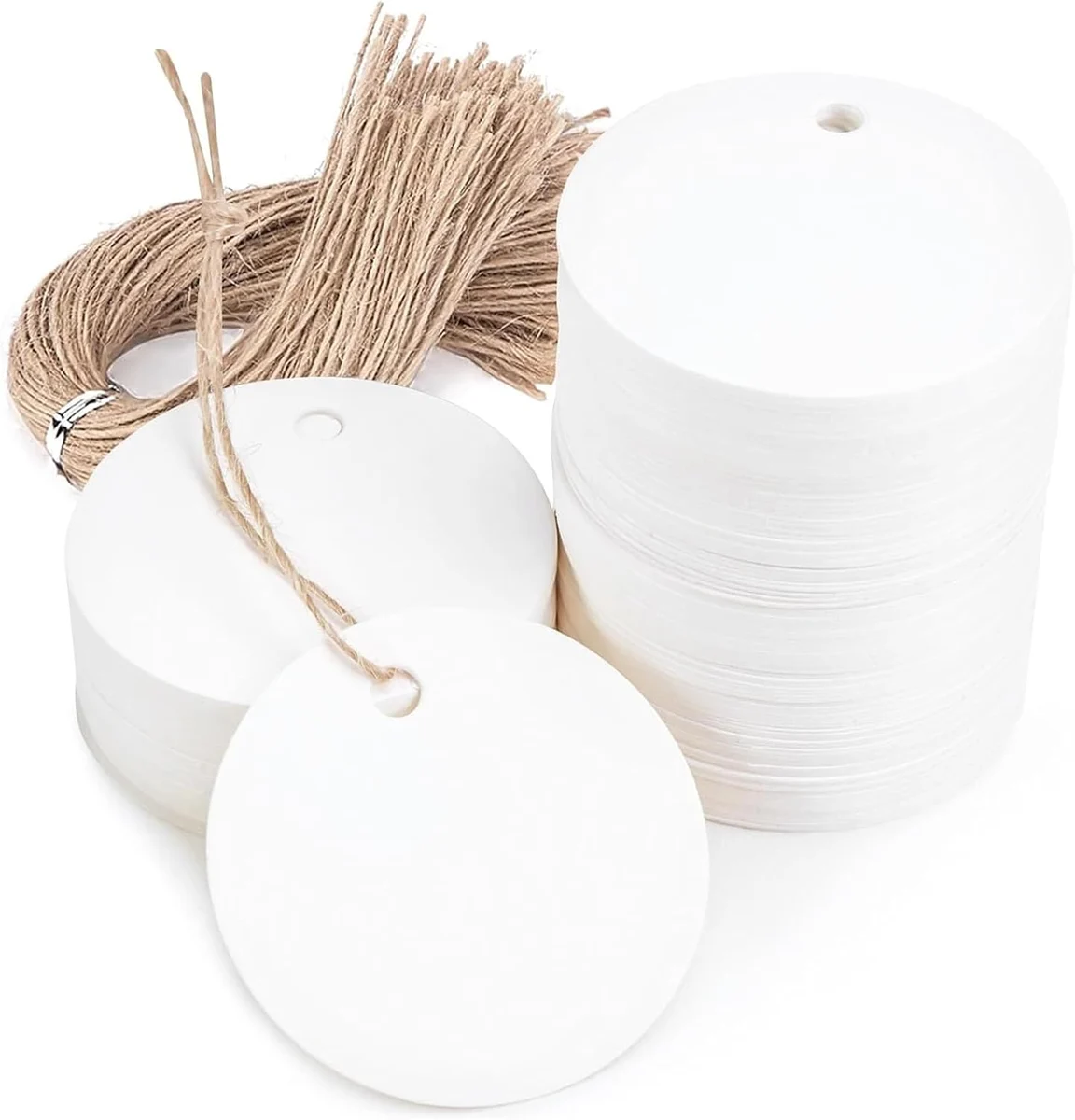
- Gift tags and bookplates. Embossed gift tags make even simple wrapping look considered.
- Gift tags and bookplates. Embossed gift tags make even simple wrapping look considered, and a bookplate with your name pressed into the cover turns a borrowed book into a keepsake.
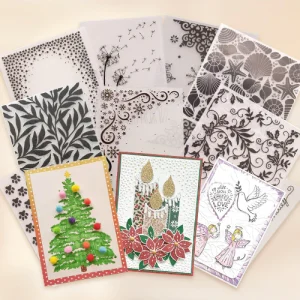
- Scrapbooking and handmade cards. Pair an embosser with our embossing folders to layer raised patterns and personalized marks in the same project.
Picking the Right Paper and Materials
An embosser is only as good as what sits between its plates. The material decides how crisp the result looks.
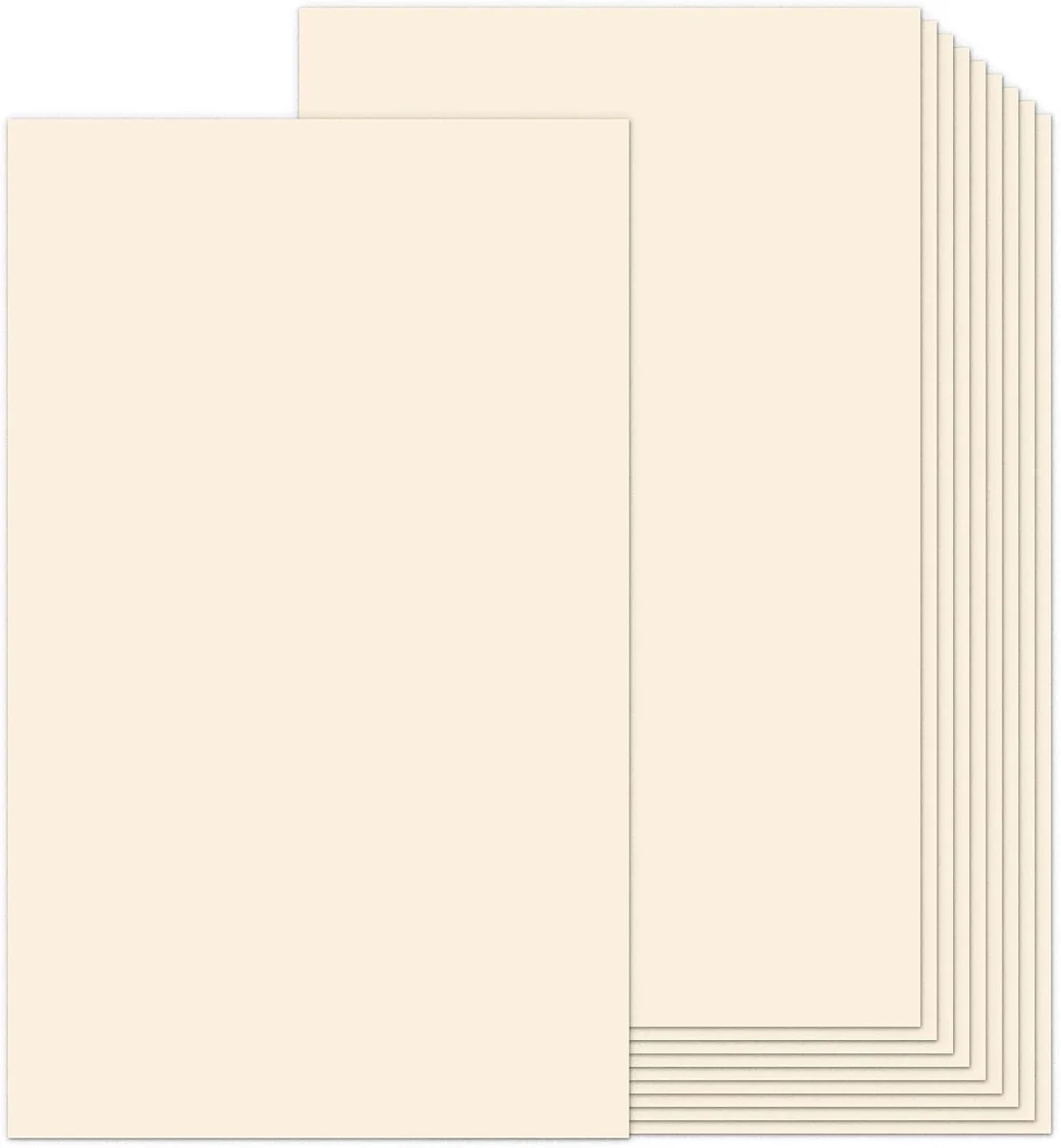
- Paper weight: we get the cleanest impression on 80 to 110 lb cover stock. Too thin and the mark looks weak; too thick and the jaws simply will not close.
- Vellum and cotton paper: these take a soft, pretty impression that photographs well.
- Coated or glossy paper: blind emboss works fine, though ink will not sit on a coated surface. Since we are not inking, that is not a problem.
- Leather: vegetable-tanned leather around 2 to 3 mm takes the best impression. It needs more pressure than paper, so an electric unit or a firm manual press works best.
| Material | Result | Our tip |
|---|---|---|
| 80 to 110 lb cover | Crisp, even | The safe default |
| Vellum, cotton | Soft, elegant | Great for weddings |
| Glossy stock | Blind emboss only | Fine without ink |
| 2 to 3 mm leather | Deep, lasting | Use more pressure |
Getting a Crisp, Deep Impression
Most of the complaints people have about embossers come down to a few fixable habits. After a year of testing, these are the notes we give everyone who buys one.
- Pressure: desktop units are tuned for cardstock. If your stock is thinner, slip a shim, a few sheets of spare cardstock, behind the paper to push the die closer and deepen the mark.
- Brass vs acrylic dies: brass holds fine detail far longer and gives a sharper edge. Acrylic is lighter and cheaper but loses crispness sooner.
- Alignment: use the guide that ships with the unit, or line up over a light box, and always do one test press on scrap. A crooked impression is the most common miss we see, and it is the easiest to avoid.
- Leather passes: for leather, a firm second press after the first deepens the design without tearing the hide.
| Problem | Fix that works for us |
|---|---|
| Faint impression | Add a shim behind thin paper |
| Crooked mark | Test on scrap, use the guide |
| Jaws will not close | Stock is too thick, switch or thin it |
| Weak on leather | Second firm press, more pressure |
Custom-Made vs Make-Your-Own
One question comes up a lot: can you just make your own die at home? In short, no, not the metal one. The brass plate is engraved by the shop from artwork you upload, and that engraving is what gives the clean edge.
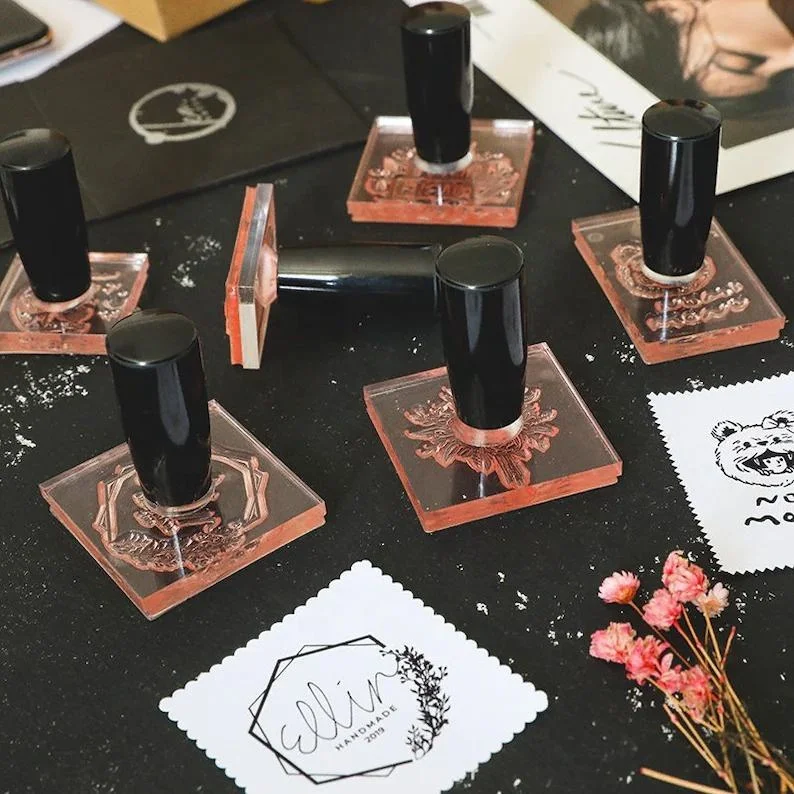
- Order a custom plate: send a clean monogram or logo, approve a digital proof, then production starts. Interchangeable plates let you run several designs on one body.
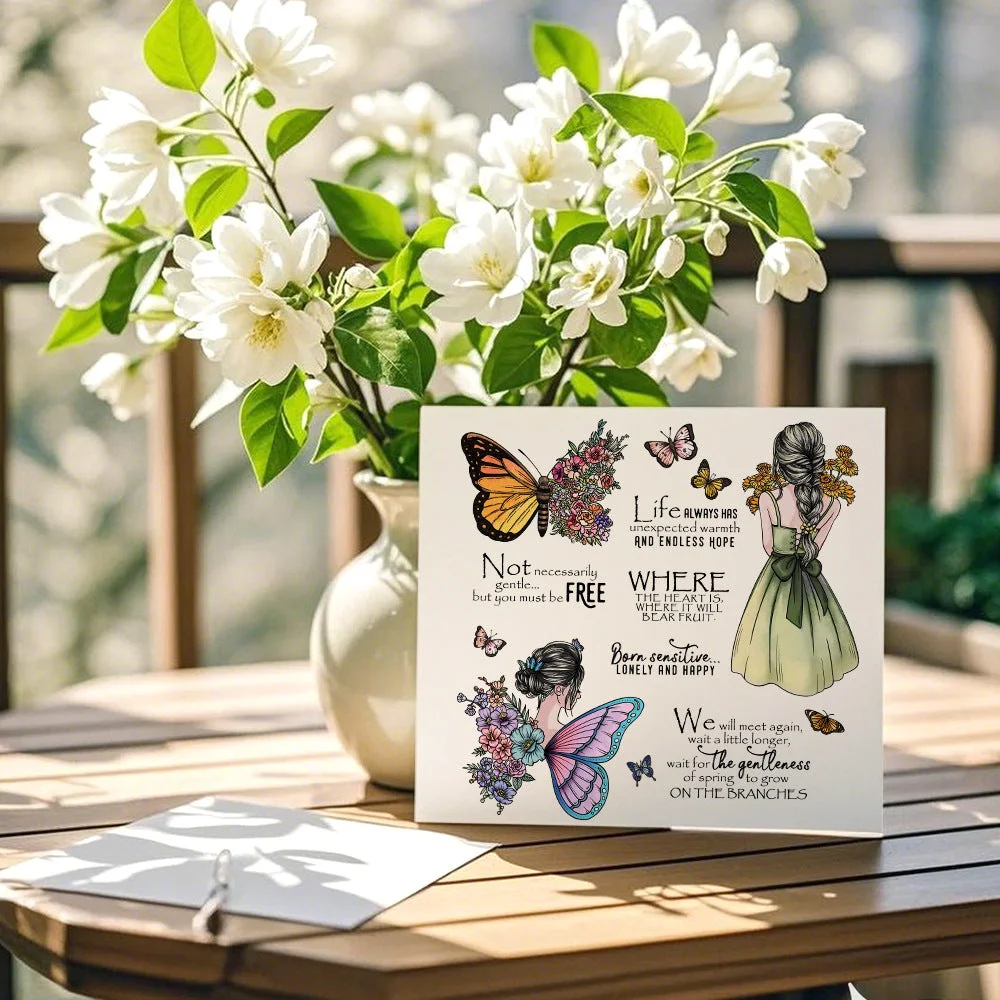
- Clear stamps as a DIY alternative: a clear stamp set is cheaper and fun for flat, inked marks, but it does not give the raised, ink-free look an embosser does. Think of them as different tools, not replacements.
Caring for Your Embosser
These tools are simple, but a little care keeps the impression sharp for years.
- Wipe the die with a soft, dry cloth. Don’t let paper dust build up in the grooves.
- Never force the handle if the stock is too thick. Forcing bends the plate and ruins the alignment.
- Store it flat and dry. Humidity is the enemy of a clean brass die.
Our Picks by Use Case
- Wedding and envelopes: a desktop lever with a return-address plate.
- On the go: a pocket embosser for planners and journals.
- Leather and volume: an electric embosser for steady pressure.
- Changing designs: an interchangeable-plate model so one body covers them all.
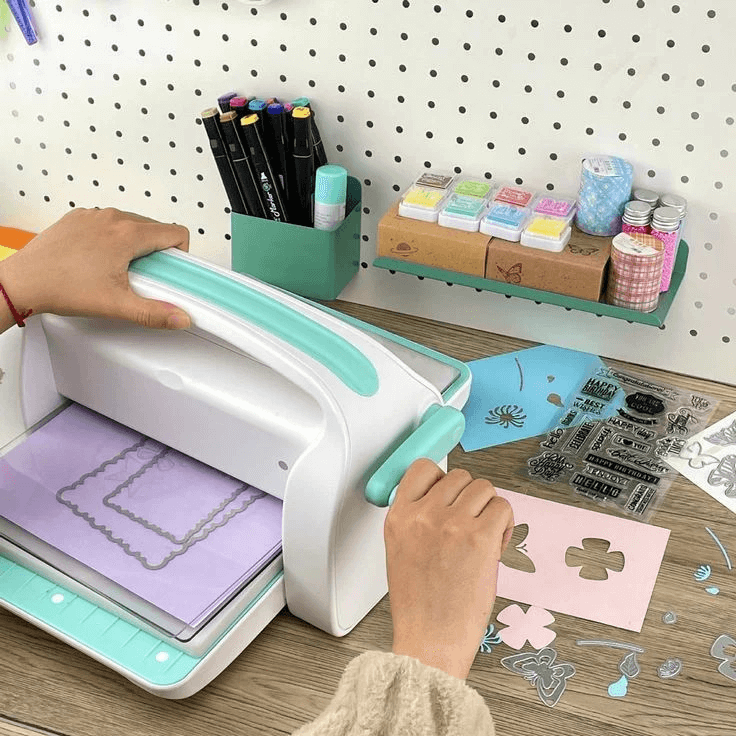
If you already own a die cutting machine, an embosser is the natural companion for adding a personal mark on top of cut shapes.
Frequently Asked Questions
Can one embosser work on both paper and leather?
Yes. Paper needs light pressure and leather needs more, so an electric unit or a sturdy manual press handles both. Always test on a scrap of the actual material first.
How long does a custom plate last?
A brass plate holds up for thousands of impressions. Acrylic wears sooner, which is why we steer most buyers toward brass for a design they will use often.
What kind of artwork do I need?
A clean black-and-white monogram or logo with no thin lines under about 1 mm. Very fine detail gets lost in the press, so keep the design bold.
Will it work on lined envelopes?
Usually yes, if the lining is thin. Thick padding stops the jaws from closing, so test on one envelope before you commit to a whole set.
How long until a custom order arrives?
Production plus shipping, and the proof step is where time slips. Approve the digital proof quickly and the rest moves fast.
Is a custom embosser worth the price?
For a one-off craft night, probably not. For anyone who sends regular stationery, makes gifts, or brands their work, the cost spreads across hundreds of impressions and the result looks far more finished than a sticker or a printed label ever will. We consider it a tool you buy once and keep for years.
We have covered what actually matters when you choose and use a custom embosser, from the type that fits your desk to the paper that gives the cleanest mark. If you are ready to put your own name or logo on your work, start with our custom embosser collection, and pair it with our embossing folders and clear stamps for projects that mix raised patterns with a personal touch.
 New Arrivals
 Best Sellers
 All Product
 Latest deals