

No products in the cart.


Journal
Common Card Sizes Explained: A Complete Beginner’s Guide for Cardmakers
Everything you need to know about card sizes, from A2 to slimline and beyond
If you’ve ever folded a piece of cardstock, scored it in the wrong spot, and ended up with a lopsided card — you’re not alone. Choosing the right card size is one of the most overlooked fundamentals in papercraft, and it makes a bigger difference than most beginners expect.
The good news? Once you understand how standard sizes work, everything else — your dies, stamps, envelopes, and design choices — falls into place much more easily.
This guide walks you through every common card size, what materials work best for each, and how to pair them with products from our store.
Why Card Size Matters
Before we dive into measurements, let’s talk about why you’d bother learning these sizes in the first place.
Getting the size right affects:
- Design proportions — A sentiment that looks gorgeous on a 5″ × 7″ card can overwhelm a 3.5″ × 3.5″ square
- Product compatibility — Your dies, embossing folders, and stamps are designed with specific card sizes in mind
- Envelope matching — Nothing kills a handmade card faster than no envelope that fits
- Postage costs — Larger cards cost more to mail; slimline cards are surprisingly mail-friendly
- Batch crafting — If you’re making 50 holiday cards, standard sizes mean you can cut and score in bulk efficiently
A2 Cards — The Industry Standard
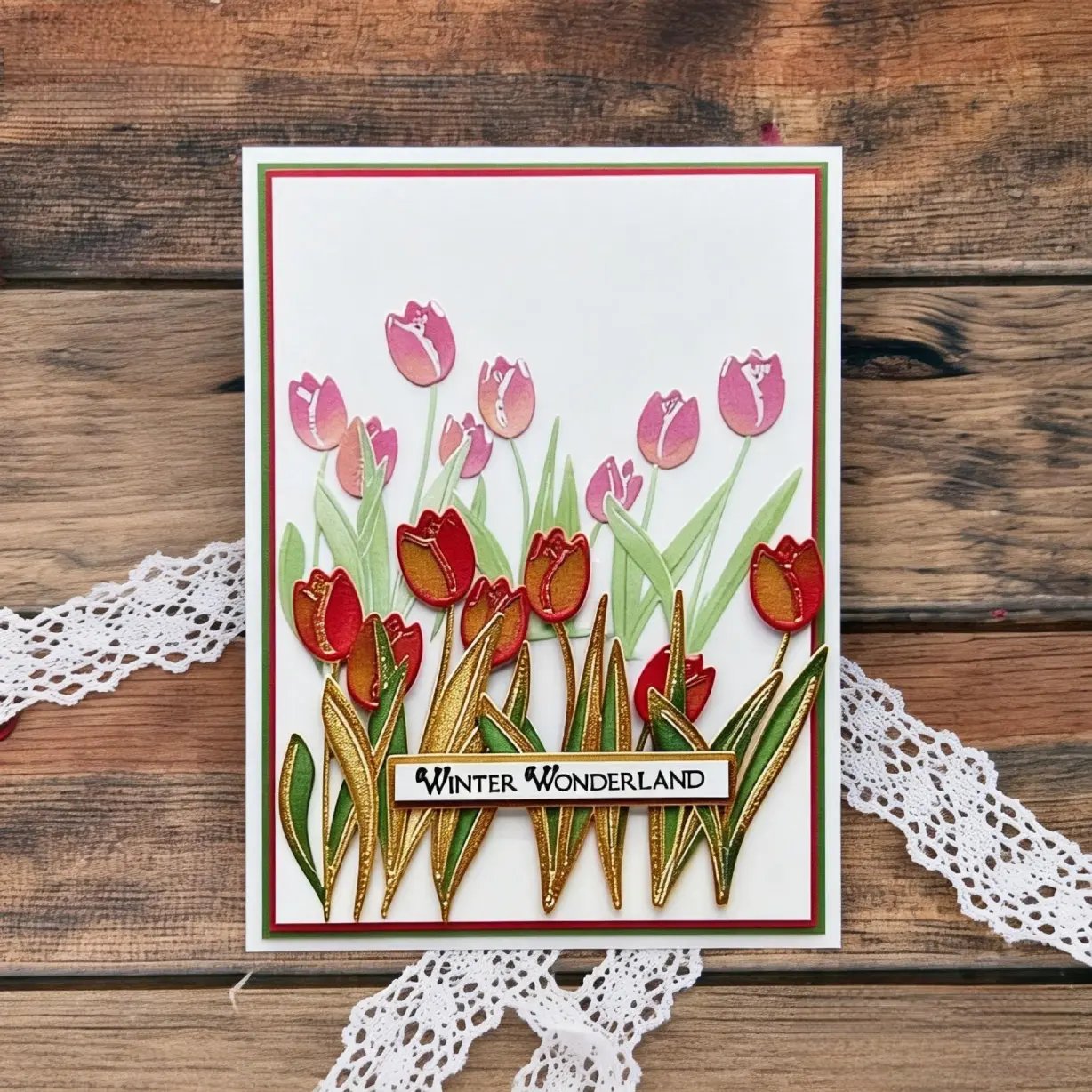
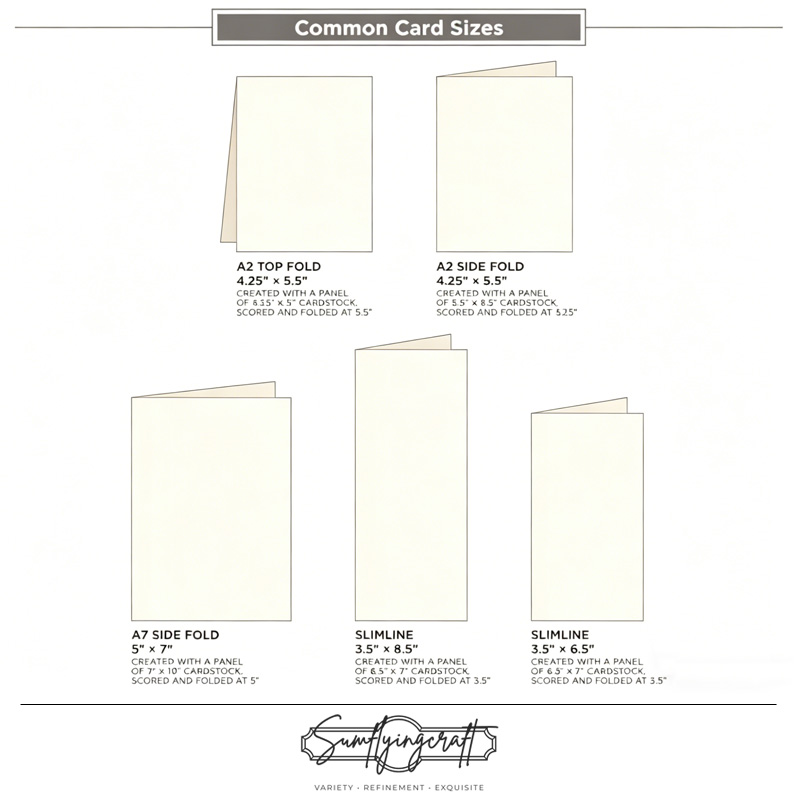
A2 is the most popular card size in papercraft, especially in the US. It’s the go-to for a reason: compact enough to mail affordably, but large enough to showcase detailed designs.
Dimensions:
- Folded size: 4.25″ × 5.5″ (approx. 10.8 cm × 14 cm)
- Base card stock: 4.25″ × 11″ — scored at 5.5″
- Side-fold variant: 8.5″ × 5.5″ — scored at 4.25″
A2 cards are sold as pre-cut cards in most craft stores, but you can easily cut and score them yourself from 8.5″ × 11″ cardstock.
What works well on A2:
- Layered die cuts
- Medium-sized stamp images
- Sentiment banners
- Window cutouts and frames
Recommended papers: Any of our cardstock papers work beautifully on A2 cards. The Vintage Old Book Pages Text Scrapbook Paper gives an instant antique feel, while the Vintage Medieval Alchemy Background Scrapbook Paper adds rich, mysterious texture.
A7 Cards — Room to Shine

A7 cards are for when you want to make a statement. At 5″ × 7″ (approximately 12.7 cm × 17.8 cm), they offer significantly more canvas for large stamp images, intricate die cuts, and elaborate layered designs.
Dimensions:
- Folded size: 5″ × 7″
- Base card stock: 7″ × 10″ — scored at 5″
Best uses:
- Wedding invitations
- Anniversary cards
- Large focal-point designs
- Cards featuring big sentiment stamps
A7 cards pair wonderfully with our Vintage Carved Lace Scrapbook Paper as a mat or background layer — the intricate pattern shows off beautifully at this scale.
Slimline Cards — Tall & Dramatic
Slimline cards have become wildly popular in the papercraft community. Their tall, narrow proportions make them stand out in a stack of regular cards, and they’re particularly well-suited for:
- Stamps with tall elements (flowers with long stems, figures)
- Scenes with depth (layered mountains, clouds, or landscapes)
- Creating multiple card variations in different colorways
Dimensions:
- Folded size: 3.5″ × 8.5″ (approx. 8.9 cm × 21.6 cm)
- Base card stock: 8.5″ × 7″ — scored at 3.5″
Mini Slimline Cards — Compact Creativity
If slimline cards feel a bit too tall for your design, the mini slimline format is a charming alternative.
Dimensions:
- Folded size: 6.5″ × 3.5″
- Base card stock: 7″ × 6.5″ — scored at 3.5″
These cards are perfect for horizontal repeat patterns and fit beautifully in smaller envelopes. They’re ideal for gift toppers, note cards, or party favor add-ons.
Square Cards — Simple but Striking
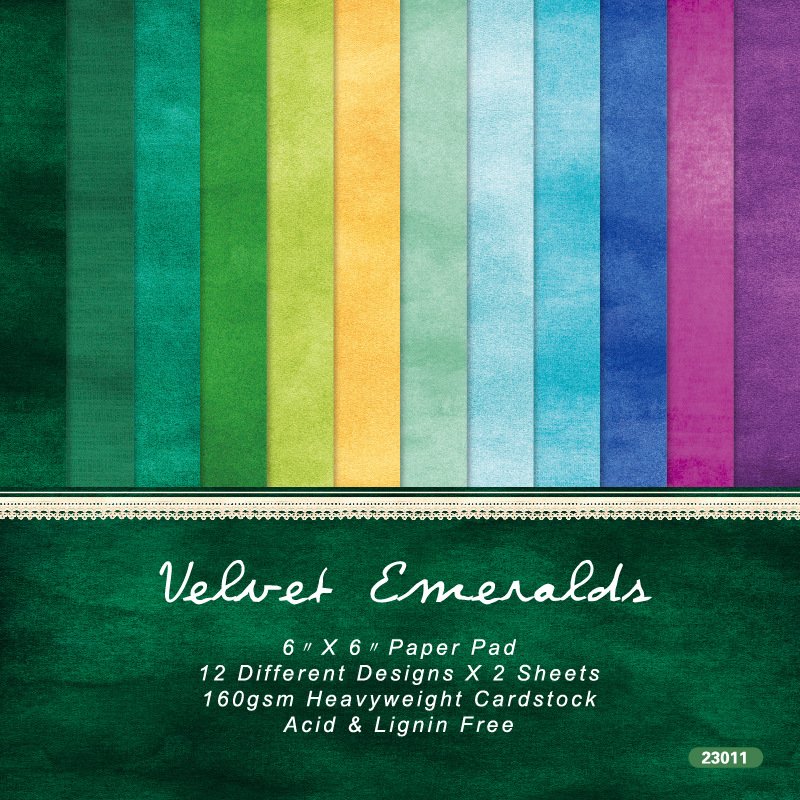
Square cards offer a modern, clean aesthetic that works beautifully in both minimalist and heavily embellished designs. They ship well, stack neatly, and look great on Instagram.
Common sizes:
- 3.5″ × 3.5″
- 4″ × 4″ (from 8″ × 4″ cardstock, scored at center)
- 4.25″ × 4.25″ (from 8.5″ × 4.25″ cardstock)
- Up to 6″ × 6″
Square cards are popular worldwide and lend themselves well to geometric dies, circular cutouts, and centered compositions.
Shaped Cards — Break the Mold
Want to really surprise someone? Shaped cards — cards cut into non-rectangular forms — add a delightful playful touch.
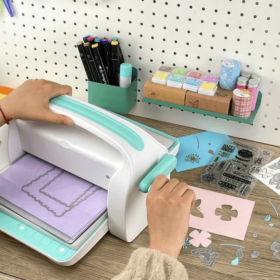
Using nesting dies (like our die cutting collections), you can create:
- A2 Arch/Shaped cards — A rectangle with an arched top, perfect for floral designs
- Oval cards — Elegant and organic
- Frame cards — With a window that reveals a layered interior
The key to shaped cards is matching the silhouette to your design. An arched card pairs naturally with rounded floral elements; a scalloped edge complements whimsical, feminine themes.
European Sizes: A6 & Beyond
In Europe and many other countries, the ISO 216 paper standard applies. The most commonly used card size is A6.
A6 Card Dimensions:
- Folded size: 4.13″ × 5.83″ (approx. 10.5 cm × 14.8 cm)
- Cut from A4 card stock (8.27″ × 11.69″)
A4 cardstock is widely available internationally, and one sheet yields:
- 2 A6 cards (side-by-side cut) — for card bases
- 4 A6 panels — for layering and matting
Handy tip: US A2 cards (4.25″ × 5.5″) and European A6 cards (4.13″ × 5.83″) are close enough in size that dies and embossing folders designed for one work well with the other. Your supplies are more versatile than you might think!
Matting & Layering: Adding Depth to Any Size
No matter which card size you choose, layering adds visual depth and professional polish.
| Card Size | Typical Layer Sizes |
|---|---|
| A2 (4.25″ × 5.5″) | 4″ × 5.25″, 3.75″ × 5″ |
| A7 (5″ × 7″) | 4.75″ × 6.75″, 4.5″ × 6.5″ |
| Slimline (3.5″ × 8.5″) | 3.25″ × 8.25″, 3″ × 8″ |
| Square (4.25″) | 4″ × 4″, 3.75″ × 3.75″ |
For texture-rich layers, try the Vintage Bill Newspaper Junk Journal Paper Pack (200 Pcs) — the mix of aged newspaper, ledger, and document pages adds instant character to any card.
Choosing the Right Paper for Each Size

For elegant, minimal cards:
Light-weight textured papers like Light Grass Silk Texture Art Material Paper work beautifully on A2 and A7 sizes.
For vintage, layered designs:
Retro Burnt Edge Scrapbook Paper is a stunning choice — the torn edge adds immediate visual interest without requiring additional embellishment.
For glamorous, eye-catching cards:
Metal Luster Clear Transparent Holographic Mirror Paper transforms any card into a showpiece. A small accent piece catches light in a way that plain cardstock never could.
For large-scale backgrounds:
Global Travel Material Paper Notebook features maps, stamps, and travel motifs — ideal for A7 and slimline cards where you want the paper itself to tell a story.
Final Thoughts
Learning standard card sizes isn’t about following rigid rules — it’s about having a solid foundation so your creativity can run free. When you know how big an A2 card is, you stop guessing whether your die will fit. When you understand slimline proportions, you can design tall florals with confidence.
Start with A2. It’s forgiving, versatile, and uses standard supplies. Once you’re comfortable, branch out — try a square card for a modern look, or go dramatic with an A7.
Most importantly: pick the size that makes you happy to craft. The right card size is the one that lets your ideas shine.
Want to browse cardstock papers for your next project? Explore our full collection of Cardstock Paper — from vintage textures to holographic accents, we have something for every style.
 New Arrivals
 Best Sellers
 All Product
 Latest deals
Pingback: Paper Size Guide - Sumflying Craft